Droptune: A Vintage Display Font for Heavy-Music Aesthetics
When selecting a typeface for a project that demands visual weight and a retro edge, the options can feel both abundant and oddly similar. Many display fonts either lean toward polished modernity or overly ornate nostalgia. Droptune enters this space with a distinct character: a vintage-inspired typeface that draws directly from the raw energy of heavy music. It is not simply a decorative font with distressed edges; its design language is rooted in the dark riffs, strong rhythms, and low frequencies that define genres like stoner rock, doom metal, and sludge. Understanding what Droptune offers, and where its limitations lie, can help you decide if it is the right tool for your specific visual communication needs.
What Is Droptune?
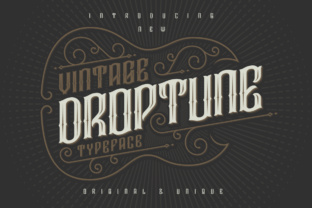
Droptune is a display typeface that merges a vintage, worn aesthetic with the sonic atmosphere of heavy, low-tuned music. Its letterforms carry deliberate irregularities—subtle bends, uneven weights, and rough edges that evoke aged signage, faded concert posters, and well-worn album covers from the 1970s. The font does not aim for pristine legibility at small sizes. Instead, it prioritizes character and mood, making it a strong candidate for headlines, logos, merchandise, and any application where the text itself needs to convey a sense of heaviness and history. The name itself hints at its core inspiration: the dropped tunings used extensively in heavy guitar music, which produce deeper, more resonant sounds. Droptune attempts to translate that sonic depth into a visual form.
Why Consider Droptune for Your Project?
For designers and creators working on projects tied to music, subculture, or retro aesthetics, Droptune offers several practical advantages. Its primary draw is its ability to communicate a specific emotional tone immediately. A headline set in Droptune suggests grit, volume, and a kind of unpolished authenticity that cleaner fonts cannot replicate. If your goal is to evoke a basement venue, a vintage amplifier, or a vinyl record from a niche label, this typeface does much of the atmospheric work for you.
Another reason to look at Droptune is its visual cohesion. Because it was developed around a unifying musical concept, the entire character set shares a consistent texture and weight. This reduces the time you might otherwise spend mixing and matching multiple fonts to achieve a similar effect. For small-scale projects like band logos, flyers, or social media graphics for music-related content, Droptune can serve as a complete typographic solution out of the box.
Benefits, Tradeoffs, and Practical Considerations
Like any specialized design asset, Droptune comes with clear benefits and some tradeoffs that are worth evaluating against your specific use case.
Strengths You Can Expect
- Strong personality: Droptune delivers a distinct vintage heavy-music vibe that is difficult to achieve with generic display fonts. It feels intentional and curated.
- Atmospheric consistency: The entire font set carries the same rough, low-frequency aesthetic, which helps maintain visual harmony across headlines, subheadings, and short text blocks.
- Time-saving for genre-specific work: If you regularly design for metal, rock, or retro-themed brands, Droptune can become a reliable go-to option that reduces the need for custom lettering.
- Memorable branding potential: Because the typeface is distinctive, it can help a logo or product stand out in crowded visual spaces, especially within music and lifestyle markets.
Tradeoffs and Limitations
- Limited legibility at small sizes: The rough edges and irregular forms that give Droptune its character also make it less readable in body text or at small point sizes. It is primarily a display font.
- Narrow stylistic range: If your project requires versatility across multiple tones—from heavy to light, or from vintage to modern—Droptune may not adapt well. It is a single-note instrument in a larger typographic orchestra.
- Potential for overuse: Because its look is so specific, using it in the wrong context can feel clichéd or forced. Viewers familiar with the genre may recognize it as a stock choice rather than a custom solution.
- May not suit corporate or professional settings: For presentations, reports, or mainstream brand communications, Droptune's rough aesthetic could undermine credibility or clarity.
When Droptune Is a Strong Fit
Droptune performs best in projects where atmosphere and attitude take priority over pure readability. Consider it for the following scenarios:
- Music-related branding: Band logos, album covers, tour posters, and merchandise for genres like stoner rock, doom metal, sludge, or psychedelic rock. The font visually reinforces the music's heavy, low-tuned qualities.
- Event promotion: Flyers and social media assets for underground concerts, music festivals, or retro-themed events where a gritty, analog feel is appropriate.
- Product packaging for niche markets: Limited-edition vinyl releases, craft beer labels, or apparel brands that target audiences with an appreciation for vintage music culture.
- Content with a nostalgic or rebellious tone: Editorial headlines, podcast titles, or YouTube channel branding that aims to capture a defiant, old-school spirit.
- Short-form display text: Logos, wordmarks, and taglines where the text is large and meant to be seen, not read in dense paragraphs.
When Alternatives May Be Worth Considering
Despite its strengths, Droptune is not the right choice for every project. There are situations where a different typeface—or a broader approach—will serve you better.
- Body text and long-form reading: For articles, product descriptions, or informational content, choose a clean, highly legible serif or sans-serif font. Droptune is simply not designed for extended reading.
- Professional or corporate branding: If your client works in finance, law, healthcare, or technology, the rough vintage look of Droptune may conflict with the desired image of stability and professionalism.
- Multi-tonal brand systems: Brands that need to shift between serious, playful, modern, and heritage tones across different touchpoints may find Droptune too rigid. A more versatile type family with multiple weights and styles would offer greater flexibility.
- Projects targeting a broad mainstream audience: Viewers who are not familiar with heavy music culture may interpret Droptune's roughness as low quality or unfinished, rather than intentional and evocative.
- Digital-first interfaces: Small UI elements, buttons, or navigation labels require high clarity. Droptune's distressed forms can become muddy on screens, especially at lower resolutions.
Practical Decision-Making Insights
To determine whether Droptune aligns with your goals, start by asking yourself a few questions. What is the primary function of the text? If it is meant to be read quickly and create a mood, Droptune may be an excellent choice. If the text needs to communicate detailed information or be scanned repeatedly, look elsewhere. Consider your audience as well. Viewers who identify with heavy music culture are more likely to respond positively to Droptune's aesthetic cues, seeing them as authentic rather than arbitrary. A general audience may require more contextual design support—such as complementary imagery or layout—to understand the intended tone.
Another practical step is to test Droptune in your actual medium. A font that looks perfect in a preview on your screen may behave differently when printed on a textured paper stock or rendered small on a mobile device. Request a sample, create a mockup, and evaluate readability, spacing, and overall impression in context. Pay attention to how the font interacts with other visual elements like logos, photos, and color schemes. Sometimes, the best use of a strongly themed font like Droptune is to pair it with a neutral, minimal background to let the letters breathe without competition.
Also, think about longevity. Trends in typography shift, and what feels fresh and edgy today may feel dated in a few years. Droptune's vintage inspiration actually works in its favor here, as it draws from established historical references rather than fleeting trends. However, if your project needs to remain relevant for a long period, consider how the font's specific music-culture associations will age. A font deeply tied to a particular subgenre may feel less appropriate if the brand's musical direction evolves.
Aligning Droptune with Your Goals
Ultimately, Droptune is a specialized tool rather than a general-purpose typeface. Its value lies in its ability to instantly communicate a heavy, vintage, music-driven atmosphere. If your project demands that kind of immediate emotional resonance—and if your audience will recognize and appreciate it—Droptune can be a powerful addition to your typographic toolkit. If your requirements lean toward versatility, broad legibility, or professional neutrality, you will likely find better results with a more conventional display font or a well-crafted neutral type family.
The key is to match the font's personality to the project's core identity. Droptune does one thing well, and that is enough for many creative needs. By being honest about its limitations and intentional about its application, you can use this typeface to elevate work that calls for dark riffs, strong rhythm, and a low-frequency visual presence.