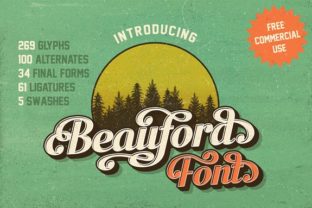
Beauford and the Art of Everyday Vintage Typography
There is something about type that stops you mid-scroll. A sign, a poster, a label that feels familiar even though you have never seen it before. That is the pull of a well-crafted vintage display face. Beauford brings that exact feeling into your hands without forcing you to dig through decades of degraded prints or spend hours distressing letters by hand. It is a new typeface that looks like it has stories to tell, yet works perfectly fine on a modern screen or a glossy print.
Let’s be honest: most of us are not professional typographers. We just want text that feels right for the project in front of us. That is where Beauford shines. It gives an authentic retro look without demanding that you become a vintage design specialist. You get the aesthetic, the warmth, and the character without the headache of restoring old type or manually adding grunge effects.
When a Brand Needs More Than Clean Sans Serif
Think about the last time you walked into a coffee shop that had that unmistakable old-school feel. The chalkboard menu, the logo above the door, the tiny tag on the bag of beans. Chances are the typeface did half the work. Beauford fits into that scene naturally. It is not trying to be trendy for a season. It carries a sense of permanence, like it belongs on a storefront that has been around since the fifties.
For small businesses, especially those in food, beverage, apparel, or hospitality, the right typeface can separate a forgettable brand from one that earns a second glance. Beauford works well on a coffee bag label, a brewery tap list, or a boutique tag. It does not scream for attention. It invites curiosity.
Some brands try to mimic this feeling with generic grunge fonts or overused slab serifs. Those often end up looking like templates. Beauford avoids that because it comes with genuine character. The extra swashes and swooshes are not gimmicks. They give you the flexibility to make headlines, logos, and short phrases feel handcrafted. That matters when a customer picks up a product and judges its personality in two seconds.
Posters, Events, and the Need for Instant Atmosphere
Imagine you are putting together a poster for a local music night, a film screening, or a vintage market. You want the date and the lineup to feel like they belong to the era you are evoking. Beauford does that without leaning into parody. It is not a costume font. It is a serious display face that happens to carry a nostalgic weight.
Event posters suffer when the type does not match the mood. A modern geometric sans can kill the vibe of a blues night. A overly decorative script can make a craft fair look cluttered. Beauford sits in that sweet spot where it is readable from a distance but still has enough detail to reward a closer look. The extra glyphs become useful here. A swoosh under a headline or a swash on a capital letter can turn a plain layout into something that feels intentional.
For festival organizers, bartenders, and community event planners, time is always short. You cannot spend hours tweaking each letter. Beauford is PUA encoded, which means you can access the alternate characters directly from any standard application. You do not need special software. You just open the glyph palette and pick the version that fits. That practicality matters when you are up against a deadline.
Content Creators and the Search for Distinctiveness
Social media feeds are crowded. Everyone has access to the same tools, the same stock photos, and roughly the same typefaces. Standing out often comes down to small choices. A YouTuber, podcaster, or newsletter writer might use Beauford for thumbnail titles, episode art, or merch. It is different enough to catch the eye but not so loud that it distracts from the message.
There is also a growing appetite for analog aesthetics in digital spaces. People respond to type that looks like it was stamped or painted. Beauford delivers that feeling without needing you to simulate ink bleed or paper texture. The design itself carries the weight. That means you can use it on a clean white background and still get that retro impression.
For creators who sell digital products, like planners, templates, or printables, Beauford adds perceived value. A worksheet or a journal prompt set in a thoughtful vintage type feels more curated. Customers notice those details. They might not name the font, but they feel the difference between something thrown together and something crafted with care.
Designers Working with Clients Who Want "That Old Look"
If you have ever had a client ask for something vintage but could not articulate what that meant, you know the struggle. Beauford gives you a concrete answer. It is a tool that bridges the gap between vague direction and finished design. Instead of explaining why a specific distressed typeface might be hard to read at small sizes, you can show them Beauford. It works for headlines, subheads, and even short blocks of text if you keep the size generous.
The typeface includes multiple swashes and swooshes that can be used as decorative elements. That is a nice bonus for packaging or branding projects. You can create flourishes that frame a logo or separate sections on a label without adding extra graphic elements. The font does the decoration for you.
One consideration, though. Beauford is a display face. It is not designed for long body copy. Trying to set paragraphs of text in it will tire the eye and dilute its impact. The best use is for short, bold statements. Save it for headlines, names, dates, and short taglines. Use a simpler companion face for the fine print. That is how you let Beauford shine without overworking it.
Strengths That Matter in Real Projects
Let me highlight a few things that stand out after spending time with Beauford.
- Authenticity without effort. You do not need to apply filters or textures to make it look retro. It already feels like it belongs in another era.
- Swashes that actually fit. Some display fonts include decorative extras that feel tacked on. Beauford’s swashes and swooshes are integrated well. They complement the letters instead of competing with them.
- PUA encoding. This is not a sexy feature, but it is a practical one. You can use the extra characters in any app that supports OpenType features. That includes Canva, Illustrator, Photoshop, Affinity, and even some word processors.
- Readability at display sizes. Despite its vintage character, Beauford remains legible. That is not always true for retro-inspired fonts.
On the flip side, there are a few limits worth noting. The font is not ideal for small text. If you try to use it for a paragraph of body copy below 14 points, you will lose some of the detail that makes it special. Also, the decorative swashes need space. Do not crowd them. Give each letter room to breathe, especially when you add a swoosh or a flourish.
Who Benefits Most from Beauford
Different people will find different uses for this typeface. That is part of what makes it a good addition to any collection.
Small business owners can use it for logos, signs, and product labels. It saves them from hiring a designer for every single piece of collateral. With Beauford, a simple can label or a storefront sign can look intentional and polished.
Freelance designers can add it to their toolkit for client projects that call for personality. It is useful when a brief asks for something nostalgic, authentic, or handcrafted. The swashes also give designers extra options for customising logos without starting from scratch.
Hobbyists and makers who sell on platforms like Etsy will appreciate how much character the font adds to product photos, listing titles, and packaging. A font like Beauford can lift a simple soap label or a candle jar into something that feels boutique.
Content creators and educators can use it for course materials, worksheets, and presentation titles. It adds warmth to content that might otherwise feel too clinical.
Before You Download and Start Using It
Beauford is a display typeface, so think of it as a tool for emphasis. Use it where you want people to stop and look. That might be the headline of a poster, the logo on a website, or the main text on a product sleeve. Reserve simpler typefaces for supporting information. That contrast will make Beauford stand out even more.
Another thing to consider is pairing. Beauford works well with clean sans serifs and simple serifs. Avoid pairing it with another heavily decorative font. The result can look busy and confusing. Let Beauford be the star. Give it a calm partner for body text.
Finally, check the license terms for your specific use case. Most display fonts come with standard desktop licenses, but if you plan to use Beauford for merchandise, branding, or commercial products, make sure you have the right coverage. That is one of those boring but important steps that saves trouble later.
Beauford is not a font that tries to do everything. It does one thing well: it gives your work an authentic vintage feel with minimal effort. Whether you are designing a beer label, a festival poster, or a social media graphic, it brings a warmth that modern typefaces often lack. And because it comes with those extra characters and swashes, you have room to make each project feel personal. That is a rare thing in a world of endless templates and cookie-cutter design.