Why Coffee at Midnight Is the Handwritten Font Your Designs Have Been Missing
There is something quietly powerful about a font that feels like it was penned by hand at the most creative hour of the day. Coffee at Midnight brings that exact energy to the table. It is not just another typeface in a crowded marketplace—it is a deliberately crafted handwritten font designed to add personality, warmth, and a touch of storytelling to any project. Whether you are a seasoned graphic designer, a small business owner building a brand from scratch, or someone who simply loves beautiful lettering, this font offers a surprisingly versatile tool for visual communication.
Handwritten fonts have grown far beyond niche use cases. They now appear everywhere from high-end branding to casual social media graphics. The reason is simple: handwriting feels human. In a digital landscape dominated by sterile, uniform typefaces, a font like Coffee at Midnight cuts through the noise. It signals authenticity, spontaneity, and intention all at once. But what exactly makes this particular font stand out, and how can you use it effectively across different mediums? Let's explore the qualities, practical applications, and considerations that matter most.
The Distinctive character of Coffee at Midnight
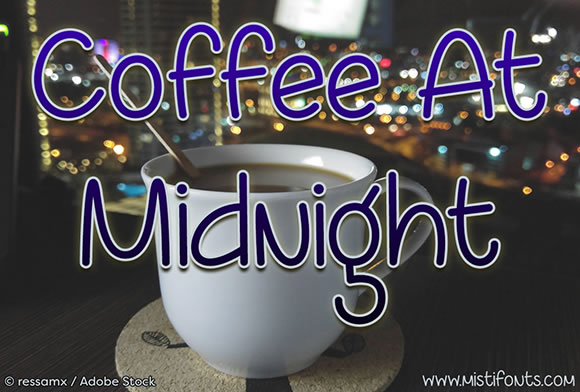
What gives a handwritten font its soul is not just the letter shapes themselves, but the subtle inconsistencies and natural rhythm they carry. Coffee at Midnight excels here. Each character feels drawn with a steady hand, yet retains the slight irregularities that make handwriting feel genuine rather than mechanical. The stroke weights vary naturally, the curves are organic, and the overall flow suggests a comfortable, confident hand at work—someone writing with a favorite pen during a quiet, productive night.
This font leans into a style that is neither too messy nor too pristine. It finds a sweet spot between casual and polished. You get the warmth of a personal note without sacrificing readability. The uppercase letters have a bold presence, making them ideal for headlines or short phrases, while the lowercase maintains a friendly, approachable cadence. The ligatures and alternate characters (if you choose a version that includes them) add even more flexibility, allowing you to break away from repetition and create a genuinely handcrafted look.
Another underappreciated quality is the font's spacing. Handwritten fonts can sometimes feel cramped or uneven when used in longer strings of text. Coffee at Midnight manages its kerning and letter spacing in a way that feels natural without requiring constant manual adjustment. This makes it far more practical for real-world use than many of its peers.
Where Coffee at Midnight shines brightest
The real magic of this font lies in its versatility. While it certainly looks beautiful on a screen or a printed page, its true strength is the range of projects it can elevate. Let's walk through some of the most compelling use cases.
Branding and logo design. If you are creating a brand identity that needs to communicate warmth, creativity, or artisanal quality, Coffee at Midnight is an excellent starting point. It works particularly well for businesses in the creative industries—coffee shops (naturally), bakeries, boutique clothing lines, stationery shops, or independent bookstores. The font can serve as the primary logo typeface or pair beautifully with a clean sans-serif for a more layered identity.
Invitations and greeting cards. Wedding invitations, birthday party announcements, save-the-dates, and holiday cards all benefit from a personal touch. Handwritten fonts like this one mimic the look of calligraphy without requiring expensive letterpress printing or hours of hand-lettering. You can achieve an intimate, bespoke aesthetic using digital tools, which saves time and cost while maintaining emotional impact.
T-shirts and merchandise. Apparel design is one of the most demanding contexts for any font. Text on a shirt needs to be readable from a distance, visually striking, and aligned with the garment's overall vibe. Coffee at Midnight holds up well here. Its bold uppercase forms make strong statements, while the casual lowercase works for more understated designs. If you are creating merchandise for a small brand, a band, or a personal project, this font can give your pieces that desirable "hand-drawn" feel.
Posters and promotional materials. Event posters, sale announcements, and promotional flyers often rely on typography to grab attention quickly. A font like Coffee at Midnight adds character that standard display fonts simply cannot match. It works especially well for headlines or featured quotes, where you want the text to feel immediate and personal rather than corporate.
Book covers and editorial design. Self-published authors, small presses, and even larger publishers sometimes look for handwritten fonts to signal a specific tone. Romance novels, memoir covers, poetry collections, or creative non-fiction can all benefit from the intimate feel of this lettering. It suggests a story that is personal, reflective, and worth reading.
Labels and packaging. Product packaging is another space where Coffee at Midnight can make a difference. Whether you are designing labels for homemade jams, craft beer, candles, or skincare products, the font communicates care and craftsmanship. In a retail environment where customers often make split-second decisions, packaging that feels handmade can be a subtle but powerful differentiator.
Practical considerations before you commit
As much as Coffee at Midnight brings to the table, no font is a universal solution. Understanding its limitations and best-use scenarios will help you avoid common pitfalls.
Readability at small sizes. Handwritten fonts, by nature, sacrifice some legibility when scaled down significantly. This font is no exception. While it performs admirably at medium to large sizes—such as headings, logos, and short phrases—it becomes harder to read in long paragraphs or very small text. For body copy, consider pairing it with a clean, readable serif or sans-serif font. A good rule of thumb: use Coffee at Midnight for display purposes, and let a simpler font handle the heavy lifting of extended reading.
Context and tone. Because this font is so expressive, it carries strong connotations. It feels casual, creative, and approachable. That is exactly what you want in many contexts, but it may not suit ultra-formal corporate branding, legal documents, or technical reports. Always consider whether the font's personality aligns with your message. When the match is right, the effect is seamless. When it is wrong, the dissonance can undermine your credibility.
Licensing and file formats. Before using any font in commercial projects, make sure you have the appropriate license. Coffee at Midnight is typically available in common formats like OTF, TTF, and sometimes WOFF for web use. If you are designing for print, OTF is generally preferred for its advanced typographic features. For web use, WOFF or WOFF2 will ensure faster loading times. Also check whether your license covers everything you need—some fonts limit the number of users or projects, while others offer unlimited commercial use.
Pairing Coffee at Midnight with other typefaces
One of the most important skills in typography is knowing how to combine fonts effectively. Coffee at Midnight pairs beautifully with a range of typefaces, and choosing the right partner can elevate your design significantly.
For a clean, modern look, pair it with a geometric sans-serif like Montserrat, Raleway, or Open Sans. The contrast between the organic handwriting and the crisp geometry creates visual interest without conflict. This combination works well for branding, websites, and packaging.
If you want a more traditional feel, try pairing it with a classic serif like Merriweather, Playfair Display, or Garamond. The handwriting adds warmth to the formality of the serif, making the design feel both established and personal. This is a strong choice for book covers, editorial layouts, and high-end invitations.
For something more playful, consider pairing it with a slab serif or a monospace font. These combinations are less conventional but can work well in niche projects where you want to stand out and make a statement.
Integrating Coffee at Midnight into your workflow
Bringing a new font into your regular toolkit does not have to be complicated. Here are some practical recommendations for making Coffee at Midnight a natural part of your design process.
Start with short-form projects. If you are new to handwritten fonts, begin with a project that requires only a few words or a short phrase. A greeting card, a social media quote graphic, or a simple logo concept are ideal testing grounds. This lets you experiment with sizing, spacing, and pairing without committing to a large-scale design.
Use it as an accent, not a crutch. The best typography feels intentional. Use Coffee at Midnight where its personality adds value—headlines, featured text, pull quotes—rather than applying it everywhere. Let it be the star of specific moments in your design, and let other fonts support the overall structure.
Customize when needed. One of the advantages of a well-crafted handwritten font is that it gives you a strong foundation, but don't be afraid to tweak. Adjust letter spacing manually for certain combinations. Change the color to match your brand palette. Use it alongside hand-drawn elements or illustrations for a cohesive, artisanal look. The font is a tool, not a constraint.
Test across mediums. A font that looks perfect on your screen may behave differently in print, on fabric, or on a web page. Always test Coffee at Midnight in the actual medium you plan to use. Print a sample at full size. Preview it on a mockup of your merchandise. Check how it renders on mobile devices if you are using it on the web. These small checks can save you from unpleasant surprises later.
Why designers keep coming back to handwritten fonts
There is a reason why handwritten fonts have become a staple in modern design. They bridge the gap between digital precision and human emotion. In an era where audiences are bombarded with polished, algorithm-optimized content, a handwritten touch can feel like a genuine conversation. Coffee at Midnight captures that spirit effectively. It gives designers a way to inject personality without sacrificing professionalism.
The font also responds well to current trends in branding and visual communication. Authenticity is highly valued. People want to connect with brands and creators that feel real, approachable, and distinct. A font that looks like it was written by hand, at midnight, with intention and care, communicates those values effortlessly.
Final thoughts on making Coffee at Midnight work for you
Coffee at Midnight is more than just a pretty font. It is a practical tool that can add warmth, character, and distinction to a wide range of projects. From logos and invitations to t-shirts and book covers, its handwritten style brings a human element that standard typefaces simply cannot replicate. The key is using it intentionally—understanding where it shines, where it needs support, and how to pair it with other design elements to create a cohesive whole.
If you are looking for a handwritten font that balances personality with usability, this one deserves a close look. Try it on a small project first. Pair it with a clean sans-serif or a classic serif. Pay attention to how it changes the tone of your work. You might find that Coffee at Midnight becomes one of those fonts you reach for again and again—not because it is trendy, but because it genuinely helps you communicate better.
Typography is ultimately about connection. The right font makes your message feel intended. Coffee at Midnight does exactly that, one letter at a time.