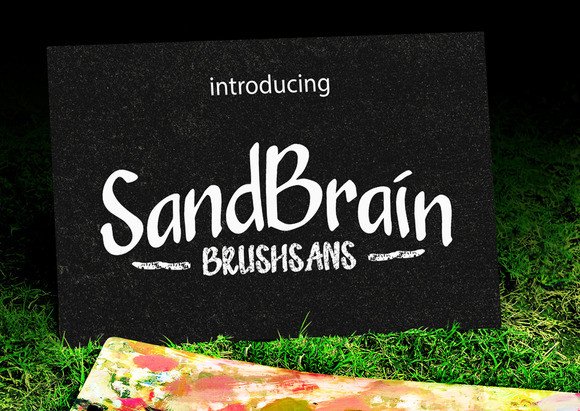
Sandbrain Family: A Versatile Handwritten Font Collection
Handwritten fonts have a way of bringing warmth and personality to any project. Whether you are designing a wedding invitation, building a brand from scratch, or simply adding a personal touch to a classroom handout, the right typeface can make all the difference. The Sandbrain Family offers exactly that kind of creative flexibility. This stunning handwritten font set includes four unique styles – Sandbrain Regular, Sandbrain Black, Sandbrain Rough, and Sandbrain 3D – all designed to work together seamlessly. The result is a toolkit that gives you room to experiment, layer, and craft something that feels genuinely yours.
Because the Sandbrain Family covers so many visual moods, it appeals to a broad range of people. Beginners appreciate how easy it is to combine the fonts without worrying about mismatched styles. Experienced designers value the nuanced differences between the regular, bold, rough, and 3D versions. Business owners, educators, and hobbyists each find their own reasons to keep this family in their toolkit. The key is understanding how these fonts align with your specific goals, skill level, and project type.
What Makes the Sandbrain Family Stand Out
At its core, the Sandbrain Family is a handwritten font collection. Each of the four fonts carries a handcrafted feel, but they are not identical. The Regular weight offers a clean, readable baseline. Black brings a heavier, more confident stroke that works well for headlines or emphasis. Rough adds a distressed, textured edge – perfect for a vintage or rugged aesthetic. 3D introduces depth and dimension, giving words a pop-art or layered look. Together, these styles let you shift tone without leaving the same font family, which keeps your project visually cohesive.
For someone who is new to typography, this means less guesswork. You can start with Regular for body text, use Black for subheadings, and sprinkle in Rough or 3D for decorative elements. The fonts are pre‑matched, so you do not have to worry about clashing styles. For a seasoned professional, the family becomes a reliable system. You can create complex compositions by layering the 3D version over the black, or using the rough texture to give a digital design a printed, handmade feel.
Beginners: Ease of Use and Creative Confidence
If you are just starting out with design, choosing fonts can feel overwhelming. There are thousands of options, and pairing them well takes practice. The Sandbrain Family simplifies this because it gives you four complementary styles in one package. You can experiment with a title in Black, a subtitle in Rough, and body text in Regular – and it will look intentional every time.
Practical example: Imagine you are creating a flyer for a small garage sale. Use Sandbrain Regular for the list of items, Sandbrain Black for the word “SALE” at the top, and then add a few words in Sandbrain Rough to give it a worn, handmade sign effect. Even if you have never opened a design tool before, you can achieve a professional look quickly. The cost is also a consideration for beginners. Since you get four fonts together, you are paying for a system rather than buying individual styles. This makes it a more economical choice for building a starter font library.
Long‑term usefulness is another factor. As your skills grow, you will discover new ways to use the same fonts. What started as a simple flyer could later become a full brand identity, all built around the same family. That kind of versatility is hard to find in a single purchase.
Creators and Professionals: Flexibility and Presentation Quality
For graphic designers, illustrators, and content creators, the Sandbrain Family offers more than just convenience. It gives you the flexibility to adapt a handwritten look to different media. The Regular and Black versions are clean enough for digital use, while Rough adds a tactile, imperfect quality that evokes screen printing or chalk. The 3D style is especially useful for social media graphics, logos, or packaging where you want the text to stand out without relying on heavy effects.
Consider a scenario: You are designing a series of posters for a local music festival. Use Sandbrain Black for the headliner names, Sandbrain 3D for the event title to give it depth, and Sandbrain Rough for secondary details like venue and date. The combination feels energetic and handmade, but still readable. If you were working only with a single handwritten font, you might struggle to create hierarchy. The Sandbrain Family solves that without forcing you to switch to a completely different typeface.
Reliability also matters in professional settings. When you deliver a file to a client or printer, you need fonts that render consistently. Handwritten fonts can sometimes have uneven spacing or missing glyphs. The Sandbrain Family is built with care, so you can trust it for commercial projects. The quality of the curves, the balance of the letterforms, and the consistency across styles mean less time tweaking and more time creating.
Small Business Owners and Marketers: Brand Identity and Speed
Small business owners often wear many hats. You might be managing your own marketing, creating social media posts, and designing promotional materials – all without a design background. A font family like Sandbrain can become a cornerstone of your brand’s visual identity. Handwritten fonts communicate approachability and personality. If you run a café, a handmade goods shop, or a creative service, this style can help your audience feel a personal connection.
Practical application: Use Sandbrain Regular for your website body text (as long as it remains legible), Sandbrain Black for your logo or main headings, and Sandbrain Rough for product labels or tags. The cohesive look builds brand recognition quickly. Because the fonts are easy to use, you can create new graphics in minutes rather than hours. Speed matters when you are juggling inventory, customer service, and accounting.
Marketers can also benefit from the layered possibilities. A call‑to‑action button overlaid with the 3D effect can catch the eye without being obtrusive. The rough version can lend a trendy, imperfect look to limited‑time offers or seasonal campaigns. Since the family covers multiple tones – from clean and bold to gritty and dimensional – you are not locked into one mood. You can adapt your messaging without overhauling your entire visual system.
Educators and Hobbyists: Learning Value and Creative Exploration
For teachers and homeschooling parents, the Sandbrain Family can be a useful tool for creating engaging handouts, classroom posters, or bulletin boards. The handwritten style feels less formal than a standard sans‑serif or serif, which can make learning materials feel more inviting. You might use Sandbrain Regular for a worksheet heading, then use Sandbrain Black for key vocabulary words that need emphasis. The 3D version is fun for art projects or to demonstrate concepts like depth and shading.
Hobbyists – whether you scrapbook, journal, or make greeting cards – will appreciate the range of textures. Sandbrain Rough gives a distressed look that pairs well with washi tape or actual ink splatters. Sandbrain 3D can mimic the effect of layered paper or foam stickers. You are not limited to digital use; you can print the fonts and cut them out for physical projects. The value here is creative exploration. You can try combinations you would not normally consider, and because all four fonts are part of the same family, even unusual pairings feel harmonious.
Learning value comes from understanding how weight, texture, and dimension affect readability and mood. Beginners can practice by taking a single phrase and rendering it in each of the four styles, then seeing how the meaning shifts. That kind of exercise builds typographic intuition without requiring expensive software.
Deciding If the Sandbrain Family Matches Your Needs
Before you commit to any font family, it helps to ask a few questions. What kind of projects do you work on most? If you frequently need a handwritten look that can also handle formal or decorative roles, this family covers a lot of ground. If your work is strictly corporate or technical, a handwritten font might not be the right fit. But for anyone who wants to add a human touch – whether for invitations, logos, packaging, social media, classroom materials, or personal art – the Sandbrain Family offers a practical, versatile solution.
Consider your skill level and how much time you want to spend on typography. Beginners will appreciate the built‑in harmony. Professionals will value the nuanced control. Business owners will like the speed and brand consistency. Educators and hobbyists will enjoy the creative potential. The combination of Regular, Black, Rough, and 3D is more than just a set of fonts; it is a system that encourages experimentation while keeping your work polished.
Cost is also worth weighing. Rather than buying one or two fonts and later needing a bolder or textured variant, you have everything in one purchase. This makes it a smart investment for long‑term use, especially if you plan to grow your design skills or expand your projects over time.
Practical Tips for Getting Started
- Test the fonts in context. Use the same short paragraph and apply each style individually to see how the tone changes. Then try layering the 3D over the Black.
- Use Regular as your workhorse. It is the most readable and works well for longer text. Save Black, Rough, and 3D for short, impactful lines.
- Pair with simple backgrounds. Because the fonts have a lot of personality, you do not need busy backgrounds. Let the typography be the star.
- Explore negative space. Rough and 3D styles can fill space quickly, so keep surrounding elements minimal for clarity.
- Think about printing. The Rough version is particularly effective when printed on uncoated paper, as it mimics the natural imperfections of ink on textured surfaces.
Whether you are designing a logo, creating a birthday card, building a website, or teaching a class, the Sandbrain Family gives you the tools to express yourself with warmth and clarity. It is a collection that grows with you – easy enough for a first project, yet deep enough for years of creative work. By understanding how each font fits your specific priorities, you can make the most of this handwritten family and bring your next project to life with confidence.