The Liner Notes Family
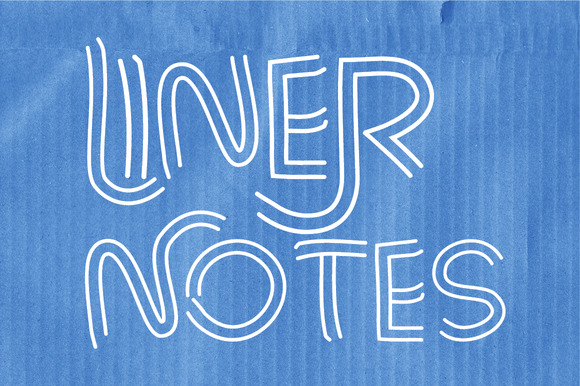
There are fonts that whisper, fonts that speak clearly, and then there are fonts that shout from the back of the classroom. The Liner Notes Family belongs firmly in that last category. If you have ever seen a word set in thick, uneven, all-caps lettering that looks like it was drawn with a rapidograph pen on a notebook cover, you have probably encountered it. Liner Notes is a scrawly, all caps display font with a fun and loud school graffiti look. It does not try to blend in. It arrives with its own volume turned up, and that is exactly what makes it useful for a surprisingly wide range of real-world projects.
Understanding what the Liner Notes Family offers means shifting your thinking away from traditional typography. This is not a font you use for body text or formal correspondence. It is a font you reach for when you need energy, urgency, or a raw, hand-done feel. The family typically includes variations in weight, width, or texture, giving you room to adapt that core graffiti energy to different formats without losing the essential personality. Let us walk through where this font actually shines, who benefits from using it, and what you should keep in mind before you drop it into your next design.
Event Posters That Demand Attention
Think about the last time you walked past a poster for a local concert, a skate competition, or a pop-up art market. The ones that stopped you likely had bold, expressive lettering. That is the natural habitat of Liner Notes. Its scrawly, hand-drawn quality mimics the energy of a flyer someone made in ten minutes with a marker, but with the consistency and scalability of a proper typeface.
For a punk show or a hip-hop open mic night, the all-caps graffiti look tells the audience immediately that this is not a formal affair. It signals raw creativity. A bar owner booking local bands can pair Liner Notes with a simple background and get a poster that feels honest and immediate. A music festival organizer might use a heavier weight from the family for the headliner name and a lighter variant for supporting acts, creating hierarchy without losing the hand-done vibe.
The key here is that the font does the work of setting the tone before anyone reads a single word. The visual language of Liner Notes communicates "this is live, this is now, this is not polished." That is gold for events that thrive on authenticity.
Album Art and Music Branding
The name itself points to its obvious home. Liner Notes, as a concept, refers to the text on album sleeves. So using a font called Liner Notes for album art or musician branding is not just clever — it is conceptually resonant. Independent musicians, especially those in hip-hop, punk, indie rock, or electronic genres, often struggle to find a visual identity that matches the grit of their sound. A clean, corporate font can sand off the edges. Liner Notes puts them back.
Imagine a lo-fi hip-hop producer releasing a beat tape. The cover art features a grainy photo of a city street at night, and the album title is set in Liner Notes, uneven and loud. It immediately tells the listener that the music inside is raw, maybe a little unpolished, and definitely personal. Compare that to the same photo with a sleek sans-serif title, and you lose a layer of meaning.
Beyond covers, the font works for merchandise. T-shirt designs, hoodie prints, and tote bags benefit from lettering that looks like it was drawn by hand. Fans connect with that handmade feel. A small record label could use Liner Notes across all its release branding to create a consistent but gritty house style that stands out on streaming grids.
Streetwear and Apparel Branding
Streetwear has long borrowed from graffiti culture, skate culture, and DIY aesthetics. Liner Notes fits that world naturally. A small clothing brand looking to create a limited drop can use the font for logo text, tagline prints, or care labels done in a bold style. The all-caps nature gives it a commanding presence on a chest or back print, and the scrawly quality prevents it from looking too corporate.
A brand that sells accessories like beanies, caps, or bags might use Liner Notes for embroidered patches or screen-printed details. The uneven strokes read as intentional imperfection, which is a staple of streetwear design philosophy. Even a sneaker reseller running an Instagram campaign could overlay the font on product shots to give the posts a cohesive, edgy look that feels native to the culture rather than borrowed.
The limitation to keep in mind is legibility at small sizes. Because Liner Notes is a display font with hand-drawn characteristics, scaling it down too much can cause letters to blend together. For apparel, this means testing the print size on a mock-up before committing. A logo that reads clearly on a laptop screen might lose its sharpness on a small tag or a hat brim.
Social Media Graphics and Content Creation
Content creators, influencers, and digital marketers are always hunting for fonts that stop the scroll. In a feed full of clean Helvetica and generic script fonts, something with the texture of Liner Notes can break through the noise. It works particularly well for announcement posts, teaser graphics, and quote cards where the message is short and punchy.
Consider a food blogger launching a new series on late-night comfort food. A graphic with the title set in Liner Notes, paired with a dark, moody photo, instantly communicates a different energy than a bright, clean font. It feels more like a zine than a magazine, more personal than polished. A fitness coach promoting a high-intensity program might use the font for motivational phrases like "GO HARD" or "NO EXCUSES." The aggressive, scrappy look of the letters reinforces the message.
One practical observation: because Liner Notes is all caps, it forces you to be economical with words. Short phrases work best. Long sentences become visually overwhelming and harder to parse. This is actually a benefit for social media, where brevity performs better anyway. The font naturally edits your message down to its core, which is a useful constraint.
Gaming and Esports Branding
The gaming world, particularly the indie and esports segments, embraces bold visual identity. Streamers on Twitch, YouTube, or Kick need overlays, channel art, and emotes that stand out in a crowded space. Liner Notes can serve as a headline font for stream titles, alert messages, or channel banners. Its graffiti roots align well with gaming subcultures that prize speed, skill, and a bit of rebelliousness.
An esports team for a fighting game or a first-person shooter might use Liner Notes for their logo or jersey text. The all-caps display style projects confidence and aggression. A speedrunner with a chaotic, energetic streaming style could use the font for "BEST RUN" or "WORLD RECORD" overlays, adding to the hype when a milestone is reached.
For game developers, especially those working on pixel art or retro-style titles, Liner Notes can be used for in-game signage, title screens, or promotional materials. It bridges the gap between digital and handmade, which is a sweet spot for many indie projects.
Zines, Flyers, and DIY Publishing
The DIY publishing world has always relied on hand-done lettering because it is cheap, personal, and expressive. Liner Notes digitizes that approach while saving time. A zine maker covering topics like music, politics, or personal essays can use the font for covers, section headers, or pull quotes. It gives the publication a consistent voice without requiring the creator to hand-letter every page.
Similarly, flyers for underground events, art openings, or community workshops benefit from the font's ability to look urgent and hand-made. A community organizer putting up posters for a block party or a protest can use Liner Notes to make the text feel like it was written by a person, not generated by software. That human quality builds trust and connection, especially in local, grassroots contexts.
Considerations Before You Commit
Liner Notes is not a universal tool. Its strengths are tied to specific contexts, and using it in the wrong setting can backfire. Legibility is the first thing to evaluate. The scrawly, all-caps nature means that certain letter combinations can become difficult to read, especially at a distance or at small sizes. Always test the font in the actual medium you plan to use — on a printed poster, on a phone screen, on a fabric swatch.
Another consideration is audience perception. Because the font carries strong associations with graffiti, punk, and youth culture, it may not land well with more conservative or corporate audiences. A financial advisor or a law firm would almost never use Liner Notes, and that is fine. Knowing where the font belongs is as important as knowing how to use it.
Pairing is also worth thinking about. Liner Notes works best when it is the star. Combining it with a clean, simple sans-serif for body text or secondary information creates contrast without competition. Avoid pairing it with other display fonts that have strong personalities, or the design becomes chaotic.
Finally, licensing matters. If you are using Liner Notes for commercial projects — merchandise, branding, products — make sure you have the correct license for the specific weight or variant you are using. The Liner Notes Family may include multiple files, and each may have different usage terms depending on where you obtain it.
Strengths That Keep It Relevant
What makes Liner Notes endure is its honesty. It does not pretend to be something it is not. In an era where design trends cycle quickly and everything can look overproduced, a font that feels drawn by hand offers a kind of visual relief. It signals that someone cared enough to make it personal. That quality is hard to replicate with more polished typefaces.
Its versatility across physical and digital formats is another major strength. Whether you are screen-printing a shirt, designing a streaming overlay, or laying out a zine cover, Liner Notes translates its raw energy consistently. It holds up well in large formats where its texture becomes part of the visual interest, and it does not require a lot of additional styling to make an impact.
The Liner Notes Family gives designers, creators, small business owners, and artists a tool that carries meaning before a single word is read. It is loud, it is fun, and it knows exactly who it is for. That kind of clarity is rare, and it is why this font continues to show up in the places where authenticity matters most.