Herbert Lemuel: A Vintage Font Family Built for Flexibility and Retro Character
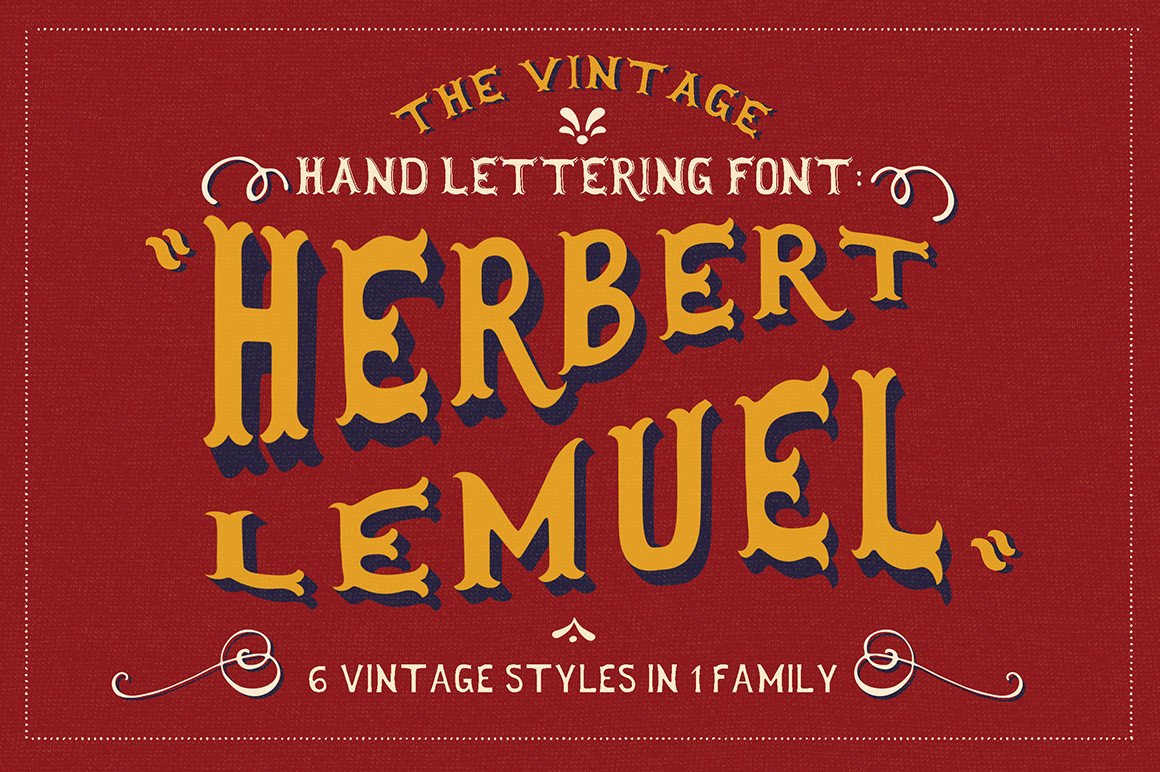
When you are exploring typography for a project with a retro or vintage feel, the choice often comes down to either a single decorative face or a more flexible system. Herbert Lemuel sits in a useful middle ground. Rather than offering one nostalgic style, this font family gives you six distinct variations under one name: Regular, Bold, Bold Shadow, Dots, Outline, and Sans. That range means you can build layered, coherent designs without stitching together mismatched typefaces from different sources. For anyone comparing vintage typography options, Herbert Lemuel deserves a close look for its practical breadth and consistent personality.
What Makes Herbert Lemuel Distinct
The core idea behind Herbert Lemuel is simple: provide a recognizably vintage aesthetic while giving designers enough variation to create contrast, hierarchy, and texture within a single project. Each of the six styles carries the same underlying DNA but serves a different visual role.
- Herbert Lemuel Regular is the foundation. It has a warm, slightly worn feel that recalls mid-century signage and printed ephemera. This is the version you would use for body text, longer captions, or anytime you want the vintage character to be present but not overwhelming.
- Herbert Lemuel Bold adds weight and presence. It works well for headings, short calls to action, or any element that needs to stand out without losing the retro tone.
- Herbert Lemuel Bold Shadow takes the bold weight and adds a built-in shadow effect. This style gives you an instant dimensional look, useful for headlines, logos, or poster titles where you want depth without manual layering.
- Herbert Lemuel Dots replaces solid letterforms with a dotted pattern. This is a decorative option that works best at larger sizes for accent words, badges, or playful brand elements.
- Herbert Lemuel Outline offers an open, stencil-like version of the letterforms. It pairs well with the solid styles for layered effects or can stand alone for a lighter, airier vintage feel.
- Herbert Lemuel Sans strips away the serifs while retaining the overall proportion and character. This is the most contemporary of the six, giving you a way to introduce a modern counterpoint without leaving the family entirely.
Having these six styles under one roof means you can build a complete typographic system from a single source. That consistency is something many standalone vintage fonts cannot offer on their own.
How Herbert Lemuel Compares to Other Vintage Typography Approaches
When evaluating Herbert Lemuel, it helps to consider the alternatives you might be weighing. One common route is to use a single, highly decorative vintage font for everything. That can create a strong look, but it often lacks the range to handle different text roles well. A ornate script might work for a headline but becomes nearly unreadable in a paragraph. Herbert Lemuel avoids that trap by giving you more neutral options like Regular and Sans alongside the decorative ones.
Another approach is to combine multiple unrelated vintage fonts from different foundries. This can yield unique results, but it also introduces the risk of clashing proportions, mismatched x-heights, or inconsistent mood across your project. Herbert Lemuel eliminates that guesswork. Since all six styles share a common design language, you know they will sit comfortably together. That simplifies the decision process, especially if you are not a seasoned typographer or if you need to produce work quickly.
A third alternative is to use modern, non-vintage fonts and add texture or wear effects through software. This gives you control over the final look, but it adds production steps and can feel artificial if not executed carefully. Herbert Lemuel offers an out-of-the-box vintage character that feels more organic because it is built into the letterforms themselves, not applied as a filter on top.
Strengths of the Herbert Lemuel Family
The main strength of Herbert Lemuel is its versatility within a defined aesthetic. You are not locked into a single look. You can build hierarchy, create emphasis, and shift tone just by switching styles within the family. For example, a poster design might use Bold Shadow for the main title, Outline for a secondary line, and Regular for supporting information. All three will feel part of the same system, which is harder to achieve with unrelated fonts.
Another strength is the range of moods the family can cover. The Sans style gives you a way to modernize a layout without abandoning the retro foundation. The Dots and Outline styles offer decorative options that feel playful rather than forced. This breadth makes Herbert Lemuel suitable for more than just one type of project. You could use it for a brand identity, a product label, social media graphics, event signage, or even web headings, and it would adapt appropriately.
For designers who work with clients or need to present multiple options, having a family like this also speeds up exploration. You can mock up the same message in several different styles to see which fits best, all within a coherent visual system.
Tradeoffs and Limitations to Consider
No single font family is right for every situation, and Herbert Lemuel has its own tradeoffs. The vintage character is distinctive, which means it may not suit projects that require a completely neutral, contemporary, or ultra-clean appearance. If you are designing for a corporate annual report, a medical website, or a legal document, a more restrained typeface would likely serve you better.
Also, while the six styles offer good range, some highly specialized vintage looks are not represented here. If your project calls for a ornate Victorian display face, a hand-painted script, or a distressed grunge texture, you may need to look outside this family. Herbert Lemuel leans toward the approachable, slightly mid-century side of retro, so it works best for projects that align with that mood.
Readability at very small sizes is another factor. The Dots and Outline styles, by their nature, lose legibility at small point sizes. They are best reserved for larger display use. The Regular and Sans styles handle body text better, but even they carry a vintage personality that may not be ideal for long-form reading. For extended text, you might pair Herbert Lemuel with a more neutral body font rather than relying on it exclusively.
Best-Fit Use Cases for Herbert Lemuel
Based on its strengths and limitations, Herbert Lemuel fits particularly well into certain kinds of projects.
Branding and identity work for businesses with a retro or artisanal positioning benefits greatly from the family. A coffee shop, barbershop, bakery, or independent retail brand can use the different styles across logos, signage, packaging, and menus while maintaining a consistent identity.
Posters and event materials for festivals, markets, exhibitions, or concerts are another natural fit. The Bold Shadow and Outline styles create immediate visual impact, and the family as a whole supports the kind of layered, textured compositions that work well in print.
Packaging and product labels, especially for food, drink, or personal care products that want a handmade or nostalgic feel, can use Herbert Lemuel to communicate authenticity and warmth. The variety of styles allows you to differentiate product lines while staying within the same visual system.
Social media graphics that need to stand out in a crowded feed benefit from the family's distinctive character. Using different styles across posts creates visual variety without the chaos of switching between unrelated fonts.
Merchandise and apparel designs often need lettering that works at a range of sizes. Herbert Lemuel's styles can be mixed on a single shirt or hat design, or used individually across different products.
Practical Examples of Mixing the Styles
Understanding how the six styles work together is key to getting the most out of Herbert Lemuel. Here are a few realistic combinations to illustrate what is possible.
For a festival poster, you might set the event name in Herbert Lemuel Bold Shadow to give it weight and depth. Below that, the date and location could go in Herbert Lemuel Sans for contrast and clarity. A tagline or featured performer could appear in Herbert Lemuel Outline for an extra layer of visual interest. Finally, the fine print or sponsor list could use Herbert Lemuel Regular to keep the vintage feel without sacrificing readability.
For a product label, you could use Herbert Lemuel Bold for the product name, Herbert Lemuel Dots for a decorative accent around the border, and Herbert Lemuel Sans for ingredients or net weight information. The Sans style provides a clean counterbalance to the more decorative elements, helping the label remain functional while still looking distinctive.
For a website heading, Herbert Lemuel Bold paired with Herbert Lemuel Outline as a secondary headline can create a layered hero section that loads quickly and reads well across devices. The Sans style can then carry body text if you want to keep everything in one family, though you may choose a more neutral font for longer passages.
Key Decision Factors for Choosing Herbert Lemuel
If you are comparing Herbert Lemuel to other options, consider these factors to decide if it fits your project.
Consistency vs. variety. If you need a coherent system where all type elements feel related, Herbert Lemuel delivers that out of the box. If you prefer the eclectic look of mixing unrelated fonts, you may want to curate your own set instead.
Mood and period. Herbert Lemuel skews toward mid-century, approachable, and slightly warm vintage styles. If your project demands Victorian, Art Deco, or grunge aesthetics, other families will be a closer match.
Range of text roles. The family covers display, headline, subheading, and some body text needs. If your project requires a full spectrum including very small text or ultra-thin weights, you may need to supplement it.
Production speed. For projects with tight deadlines, having a ready-to-use system of six coordinated styles saves time. You can skip the trial-and-error phase of pairing multiple fonts and focus on layout and content instead.
Longevity. Because Herbert Lemuel is not tied to a specific trend, it has a good chance of looking appropriate for years to come. That makes it a solid investment for branding projects where consistency over time matters.
When You Might Need Another Option
Herbert Lemuel is a strong choice for many retro and vintage contexts, but there are clear situations where another approach makes more sense. If your project requires absolute neutrality, high formality, or extreme readability at very small sizes, a more conventional typeface family will serve you better. Similarly, if you are looking for a very specific historical revival that falls outside the mid-century range, you will likely find a more faithful option elsewhere.
For projects that need a rough, distressed, or heavily textured vintage look, Herbert Lemuel's relatively clean letterforms may feel too polished. In that case, a font with built-in wear or a custom treatment applied to a neutral typeface could be a better fit.
Ultimately, the right choice depends on what you value most: consistency and range within a defined aesthetic, or the ability to chase a very specific look even if it means piecing together parts from different sources.
Herbert Lemuel offers a practical, well-rounded solution for anyone who wants reliable vintage character without being limited to a single style. Its six variations give you room to design with depth and intention, which is more than many retro font families provide. For a wide range of branding, print, and digital projects, it is a solid foundation worth considering.