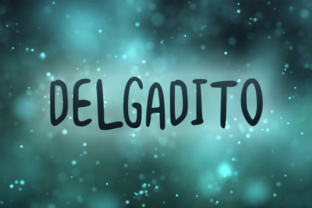
The Delgadito Font: A Handwritten Typeface Crafted by Carolina Valtuille
There is something quietly compelling about a font that does not try to be perfect. In a world saturated with sterile, machine-tooled typefaces, the resurgence of handwritten fonts speaks to a deeper need for authenticity and human connection. Among these, Delgadito stands out not because it shouts, but because it whispers with intent. Created by the talented Carolina Valtuille, this handwritten typeface is a study in deliberate simplicity, yet it carries a surprising range of applications. Understanding its origins, its visual character, and its practical strengths can help you decide whether it deserves a place in your next project.
What makes Delgadito particularly interesting is its origin story. Carolina Valtuille, an Argentine designer known for her work in branding and typography, designed this font with a specific vision in mind. She did not aim for the frenetic energy of a quick scribble or the polished perfection of a calligraphy manual. Instead, she captured something in between—a steady, graceful hand, writing with intention. The name itself, “Delgadito,” which translates to “thin” or “slender” in Spanish, hints at its most defining physical trait: its delicate, fine strokes. This is not a bold, heavy display font. It is a typeface that thrives on lightness and clarity.
The Visual Anatomy of a Delicate Hand
When you first load Delgadito onto your screen, the most immediate impression is one of airiness. The x-height is measured, the ascenders and descenders are elongated but not exaggerated, and the overall letterfit suggests a person writing carefully on unlined paper. The strokes are consistent, yet there is a subtle irregularity in the curves that prevents it from feeling mechanical. This is the hallmark of a well-executed handwritten font: it looks like it was made by a person, not an algorithm.
One of the most praised qualities of Delgadito is its readability. Many handwritten fonts sacrifice legibility for aesthetic flair, cramming letters together or distorting shapes for effect. Valtuille took a different approach. She kept the letterforms open and generous. The counters—the enclosed spaces inside letters like o, p, and e—are wide enough to remain distinct even at smaller sizes. This makes Delgadito far more functional than many of its contemporaries. It does not force you to squint. It invites you to read.
The font also features a consistent slant, giving it a natural forward momentum. This slanted posture, combined with the light stroke weight, creates a sense of movement without inducing visual fatigue. For designers, this is a rare and valuable combination. You get the personality of a handwritten font with the functional stability of a text-friendly typeface.
Practical Applications: Where Delgadito Excels
Understanding the characteristics of a font is only half the battle. The real question is: where does it work best? Delgadito is not a one-size-fits-all solution, and recognizing its strengths will save you from misapplying it.
Branding and Logos for Gentle Identities
If you are working on a brand that needs to communicate warmth, approachability, or artisanal care, Delgadito is an excellent candidate. It lends itself well to boutique businesses, small cafes, florists, pottery studios, or children’s book authors. The delicate strokes suggest a handcrafted quality without feeling overly ornate. It is refined enough to appear on a professionally printed business card, yet casual enough to feel personal on an Instagram story. For a logo, pairing Delgadito with a simple geometric icon or a clean sans-serif secondary font creates a balanced, modern identity that still feels human.
Invitations and Event Stationery
Handwritten fonts are a popular choice for wedding invitations, save-the-dates, and baby showers. However, many options are either too fussy or too informal. Delgadito hits a sweet spot. It is elegant enough for a formal evening wedding invitation, but not so formal that it feels stiff. Using it for the body text of an invitation—perhaps paired with a more decorative script for names or headings—allows you to introduce personality while keeping the essential information easy to read. The thin strokes also reproduce well on textured paper, an important consideration for printed stationery.
Digital Content and Social Media
In the noise of social media feeds, a lighter, more genuine font can be a welcome sight. Delgadito works beautifully for quote cards, product descriptions on lifestyle brands, or story highlights. Because it is legible even at smaller sizes, it functions well for mobile-first content. It also pairs effectively with soft photography, muted color palettes, and natural textures. If your brand voice is gentle, reflective, or nurturing, this font can reinforce that tone without dominating the visual space.
What to Consider Before Using Delgadito
Every font has limitations, and being aware of them helps you make better design decisions. Delgadito is no exception. Its slender weight means it struggles in certain contexts. For example, using it at very small sizes—below 10 or 12 points—can cause the strokes to become too thin for comfortable reading, especially on low-resolution screens. Similarly, it is not designed for heavy body text in long-form articles. While it can work for short paragraphs, you would not want to set an entire novel in Delgadito. The reader would tire quickly.
Another consideration is contrast. Because the font is light, it requires sufficient contrast against its background. A dark gray or black text on white works best. Reverse applications—white text on a dark background—can be tricky. The thin strokes may appear to bleed or weaken against a dark field, particularly in digital formats. If you do use it in reverse, consider increasing the font weight slightly or using a larger size to compensate.
- Size matters: Keep Delgadito at 12 points or above for optimal legibility.
- Background contrast: Use it on light backgrounds. Avoid complex patterns or low-contrast environments.
- Pair with care: Combine Delgadito with a sturdy sans-serif like Montserrat, Lato, or Open Sans for body copy or supporting text.
- Character support: Check that the font includes the glyphs you need, especially if you are working with multiple languages or special punctuation.
The Emotional and Practical Value of a Handwritten Font
Why choose a handwritten font at all? The answer lies in the emotional resonance of the hand. When a reader sees a typeface that mimics human writing, they subconsciously associate it with personal effort, care, and authenticity. In an age where much of our communication is typed, templated, and automated, a handwritten font can break through the monotony. It signals that a human being was involved in the creation—that the message matters.
Delgadito, with its restrained elegance, amplifies this effect. It does not try to mimic the messy handwriting of a hurried note, nor does it aspire to the elaborate flourish of copperplate script. It occupies a middle ground that many designers find useful: it is personal without being precious. It is warm without being sentimental. This balance is what makes it so versatile for a wide range of projects, from rebranding a local bakery to creating the visual identity for a wellness app.
Carolina Valtuille’s design philosophy, as reflected in Delgadito, seems to prioritize utility without sacrificing soul. The font works because it respects the reader. It does not demand attention through boldness or novelty. Instead, it earns trust through clarity and consistency. For designers who understand that type is ultimately about communication, not decoration, this is a valuable tool to have in the kit.
Integrating Delgadito Into Modern Workflows
Whether you are a graphic designer, a small business owner, or a content creator, incorporating Delgadito into your workflow is straightforward. The font is available in several formats, including OTF and TTF, so it works across both Mac and Windows environments. It loads easily into design software like Adobe Illustrator, Photoshop, InDesign, as well as web design tools like Figma and Canva. For web use, you can serve it via CSS or use a typeface delivery service that hosts it, provided you have the appropriate license.
When using Delgadito for branding, think about consistency. A logo featuring the font can be extended into business cards, letterhead, packaging, and social media templates. Because the font is light and distinctive, it creates a cohesive visual thread that ties these materials together. For web design, it is best reserved for headings, short callouts, pull quotes, or hero text where you want to inject a human voice. Pair it with a reliable web-font for body copy to ensure accessibility and performance.
One practical recommendation is to test the font across multiple devices before committing to it in a web project. Because handwritten fonts can render differently depending on the browser and operating system, it is wise to preview how Delgadito looks on both desktop and mobile screens. Some designers create a fallback font stack that includes a similar-style font in case Delgadito fails to load, ensuring the design stays intact.
Observations on the Broader Context of Handwritten Type
The rise of handwritten fonts like Delgadito reflects a larger cultural shift toward the personal and the handmade in design. This is not a new trend, but it has endured because it addresses a genuine need for differentiation. In a crowded visual landscape, a font that looks like it was drawn by a person can cut through the noise more effectively than another generic sans-serif.
What separates Delgadito from the hundreds of other handwritten fonts available today is its restraint. Carolina Valtuille resisted the temptation to add unnecessary flourishes or exaggerated irregularities. She created a font that feels both modern and timeless. It does not scream for attention. It waits to be discovered. And when it is used well, it creates an intimate connection between the content and the reader—a quiet reminder that behind every design, there is a human hand.
For anyone considering a handwritten typeface for their next project, Delgadito deserves serious consideration. It offers the warmth of the human touch without sacrificing the clarity that good communication demands. Whether you are designing a wedding invitation, a brand identity for a small business, or a social media campaign, this font delivers a sense of authenticity that is hard to replicate with anything else. And that, in a world of endless digital noise, is a rare and valuable gift.