Medusa Gothic: The Romanesque Serif Display Font That Commands Attention
Typography is the silent voice of design. Every curve, every serif, every carefully placed ornament speaks to the viewer before a single word is read. For designers, the choice of typeface is never trivial. It sets the mood, establishes authority, and communicates meaning beyond the text itself. Among the vast ocean of fonts available today, a select few manage to carve out a distinct identity that feels both timeless and fresh. Medusa Gothic is one such typeface. A Romanesque serif display font custom tailored for titles and logos, Medusa Gothic blends classic Roman letterforms with undulating, organic glyphs that give it an unmistakable presence. Whether you are designing a book cover, a game interface, a billboard, or a brand logo, this typeface offers something rare: a unique visual voice that commands attention without shouting.
What Is Medusa Gothic? A Ground-Level Introduction
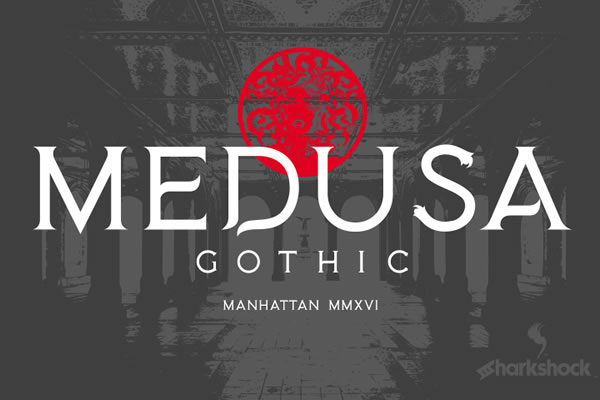
At its core, Medusa Gothic is a Romanesque serif display font. The term "Romanesque" refers to a style inspired by early medieval European typography and stone-carved lettering, characterized by sturdy, rounded forms and a sense of grounded permanence. Unlike more delicate or ornate serif fonts, Romanesque typefaces convey strength, stability, and a subtle historical resonance. Medusa Gothic takes that foundation and adds a layer of organic curiosity. The letterforms are not rigid or perfectly geometric; they undulate gently, giving the typeface a living, breathing quality. This is not a font designed for long-form body text. It is a display typeface, purpose-built for moments when you want every letter to leave an impression.
The font comes in a light weight that, combined with liberal kerning, creates a spacious, airy feel. It literally "gobbles up horizontal space," as the typeface's designers note, making it ideal for short, impactful uses where letter spacing and silhouette matter as much as the words themselves. Medusa Gothic includes basic Latin and extended Latin character sets, kerning, and extremely limited punctuation. This means it is best suited for projects where you control the copy and can ensure the punctuation you need is present.
The Signature Detail: Leaf-Like Ornaments That Hug the Letters
Perhaps the most immediately recognizable feature of Medusa Gothic is the subtle, curious leaf-like ornaments that hug the ends of the lowercase c, j, and s. These small flourishes are not overwhelming or cumbersome. They are delicate, almost whispering to the reader rather than announcing themselves. The ornaments evoke organic growth, a sense of nature creeping into the rigid structure of Roman lettering. This tiny detail transforms an otherwise straightforward serif display font into something memorable and distinctive. For designers looking to add a touch of whimsy or elegance without compromising readability at larger sizes, these leaf forms are a gift.
Importantly, Medusa Gothic gives you control over these ornaments. If you need a cleaner, more restrained look, simply use all caps. When set in uppercase, the leaf details disappear entirely, leaving you with a pure Romanesque display face. This dual personality makes the typeface versatile across different brand contexts. A logo might use lowercase for warmth and personality, while a headline might use all caps for authority and clarity. The choice is yours, and the transition is seamless.
Classic Roman Letterforms Meet Undulating Glyphs
The design philosophy behind Medusa Gothic is a study in contrast. On one hand, the letterforms are rooted in classic Roman typography. The proportions, the serif structures, and the overall balance come from a tradition that dates back centuries. This gives the font a sense of legitimacy and enduring style. On the other hand, the glyphs are not rigid. They undulate. There is a gentle wave, a subtle organic flow in the strokes that makes the typeface feel alive and contemporary. This combination of the ancient and the organic is what makes Medusa Gothic stand out in a crowded market of display fonts.
This undulating quality is particularly effective at larger sizes. When you set Medusa Gothic at 48pt or 72pt, the slight irregularities become visible, adding texture and interest. The typeface does not look like it was drawn by a machine. It looks like it was carved by a human hand, with all the warmth and imperfection that implies. For projects that aim to convey craftsmanship, authenticity, or a connection to nature, this human quality is invaluable.
Practical Applications: Where Medusa Gothic Shines
Because Medusa Gothic is a display font with limited punctuation and a light weight that consumes horizontal space, it is best used in specific contexts. Here are some of the most effective applications:
- Book covers: The typeface's Romanesque character lends itself well to literary fiction, fantasy, history, and poetry. A single word set in Medusa Gothic can evoke an entire world. The leaf-like ornaments on the lowercase add a subtle organic touch that pairs beautifully with illustrated covers or minimalist designs.
- Video game titles and interfaces: For indie games, RPGs, or any title that wants a distinctive typographic identity, Medusa Gothic provides an immediate visual hook. The undulating glyphs suggest a living world, while the Romanesque roots convey depth and lore.
- Billboards and posters: When you need a headline that grabs attention from a distance, the spacious kerning and light weight of Medusa Gothic make it highly legible at large sizes. The unique ornamentation becomes a differentiator in busy visual environments.
- Logos and branding: For brands that want to communicate elegance, tradition, and a touch of organic warmth, Medusa Gothic offers a flexible foundation. Use lowercase for a friendly, curious feel, or all caps for a more authoritative presence.
- Packaging and product labels: Premium products, especially those in the food, beverage, or wellness space, can benefit from the refined, natural aesthetic of Medusa Gothic. The leaf forms suggest botanical or artisanal qualities.
Understanding the Limitations: Punctuation and Space Considerations
No typeface is perfect for every job, and Medusa Gothic has its limitations. As mentioned, it includes extremely limited punctuation. This means you will not find every comma, colon, or quotation mark you might expect from a full-bodied typeface. If your project requires extensive punctuation, you may need to supplement with another font or carefully design around this constraint. This limitation is a direct consequence of the font's purpose: it was not designed to be body text. It was designed for titles, logos, and short-form display use where punctuation is minimal.
Another consideration is the font's horizontal appetite. The liberal kerning and light weight mean that Medusa Gothic takes up more space than many other display typefaces. This is part of its charm, but it also means you need to plan your layouts accordingly. A headline that fits in one line with a condensed font may require two lines with Medusa Gothic. Embrace this spaciousness; it is part of what gives the typeface its distinctive, breathable elegance.
Common Misunderstandings About Romanesque Display Fonts
One common assumption is that Romanesque or serif display fonts are old-fashioned or overly formal. Medusa Gothic challenges that notion. The undulating glyphs and the playful leaf ornaments give it a contemporary edge that feels fresh and approachable. It is not a stuffy museum piece; it is a living typeface that adapts to modern design sensibilities.
Another misunderstanding is that display fonts with ornamentation are difficult to use or that they clutter the design. In the case of Medusa Gothic, the leaf details are subtle and localized. They do not compete with the letterforms; they complement them. The fact that they disappear in all caps gives you full control over when and how to use them. This is a typeface that rewards thoughtful application. Used well, it elevates the design without overwhelming it.
How Medusa Gothic Fits Into Modern Design Practice
In an era of digital saturation, designers are constantly searching for ways to make their work feel distinctive and human. Medusa Gothic answers that call. Its blend of classical structure and organic flow resonates with contemporary trends that value authenticity, craftsmanship, and a connection to the natural world. Whether used in print or on screen, the typeface brings a tactile, hand-hewn quality that stands apart from the endless sea of clean, sterile sans-serifs.
Moreover, the font's focus on titles and logos aligns perfectly with the way brands communicate today. Short, punchy headlines, memorable logotypes, and visual identity systems all benefit from a typeface that makes a strong first impression. Medusa Gothic does not fade into the background. It steps forward and claims its space. For designers working on projects where the typography needs to carry the emotional weight, this typeface is a powerful tool.
Tips for Using Medusa Gothic Effectively
- Give it room to breathe. Because Medusa Gothic consumes horizontal space, pair it with generous margins and plenty of white space. Let the letters stretch out and be seen.
- Use all caps for a clean look. If the leaf ornaments feel too playful for your project, switch to uppercase. The typeface retains its Romanesque authority without the organic flourishes.
- Pair with a simple sans-serif for body text. Since Medusa Gothic is not suitable for body copy, choose a neutral, legible sans-serif like Helvetica, Open Sans, or Inter for longer passages. The contrast between the display font and the body font will be visually pleasing.
- Experiment with size. The undulating glyphs become more apparent at larger sizes, so try setting your headline at 60pt or above to fully appreciate the organic details.
- Check your punctuation. Before finalizing a design, make sure any punctuation you need (periods, commas, question marks, etc.) is available in the font. If not, consider using a complementary font for those characters or adjusting your copy.
The Bottom Line: A Typeface That Commands Attention
Medusa Gothic is more than just a font. It is a design statement. With its Romanesque serif foundation, undulating glyphs, and signature leaf-like ornaments on the lowercase c, j, and s, it offers something genuinely different in the world of display typography. It is not a workhorse font for everyday use. It is a specialist, a tool for the moments when you need to captivate an audience, establish a mood, or give a project a unique identity. Whether you are designing a book cover, a game title, a billboard, or a logo, Medusa Gothic invites you to slow down, look closely, and appreciate the art of the letter. In a world of fast, disposable design, that is a welcome invitation indeed.
For designers and brand creators who value craft, history, and originality, Medusa Gothic is a worthy addition to the toolkit. Just remember its limitations, embrace its spaciousness, and let those delicate leaf forms do their subtle work. Your next project might be the one that finally gets the attention it deserves.