Chump Change: The Blocky Serif Display Font That Commands Attention
There is something undeniably satisfying about a font that refuses to be ignored. Chump Change delivers exactly that—a chunky, all-caps serif display typeface built to grab attention without apology. It lands with a visual thud, thick and substantial, each letterform packing enough weight to anchor a headline or shout from a poster. For designers, business owners, and anyone who needs text to land hard, this font offers a no-nonsense tool that balances personality with purpose. But like any specialized typeface, understanding its strengths and limitations is the difference between using it effectively and forcing it where it does not belong.
What Makes Chump Change Different from Other Display Fonts
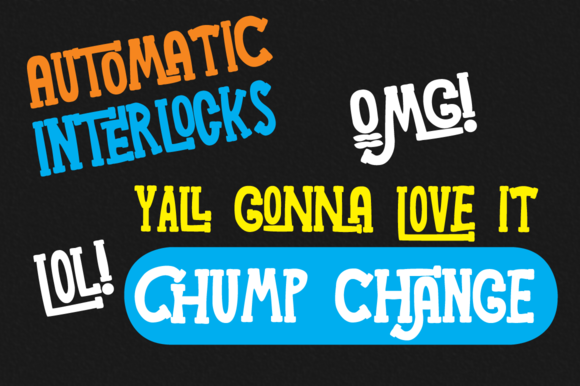
Walking through a library of display fonts, you will find plenty of bold faces and loud serifs. Chump Change distinguishes itself through a specific combination of traits that few typefaces bring together. The chunky serifs are not delicate or refined—they are thick, squared off, and built to hold their own at large sizes. The all-caps format means every letter stands at full height, creating a uniform, commanding block of text. The blockiness is deliberate; each character feels almost carved from a single slab, giving the font a physical presence that many digital typefaces lack.
The loudness is not accidental either. Where other fonts whisper or nudge, Chump Change announces. It works because it does not try to be subtle. The contrast between thick strokes and serifs is minimal, which means the font reads as a single dense shape from a distance. This is a huge advantage for signage, posters, and any medium where the message needs to register before the viewer gets close. At the same time, the chunky serifs retain enough traditional letter structure to avoid becoming unreadable—a trap that many experimental display fonts fall into.
The Core Characteristics at a Glance
- All-caps only: Every glyph is uppercase, reinforcing the bold, declarative tone.
- Chunky serifs: Thick, blocky serifs that anchor each letter and create visual weight.
- Squared-off shapes: Minimal curves, giving the font a constructed, almost architectural feel.
- High legibility at scale: Designed to be read from a distance, not from inches away.
- Uniform stroke width: Little variation between thick and thin, which adds to the monolithic look.
Where Chump Change Shines: Real-World Applications
Because Chump Change is purpose-built for display use, its natural habitat is large-scale, high-impact contexts. Here are scenarios where the font performs particularly well, along with examples to illustrate the thinking behind each choice.
Posters and Event Announcements
A concert poster or festival flyer needs to communicate the essential details in the two seconds someone glances at it from across a room. Chump Change excels here because the blocky serifs and uniform caps create a visual anchor that does not get lost in busy backgrounds. Try using the font for the headline—say, "BATTLE OF THE BANDS" or "FALL FESTIVAL 2025"—and pair it with a simpler sans-serif for the date, location, and supporting details. The contrast between the loud headline and the clean body text creates a clear hierarchy that guides the eye naturally.
Brochures and Covers that Need to Sell
Book covers, brochure titles, and magazine spreads often rely on a single strong typeface to set the tone. A nonfiction book about construction, manufacturing, or even a gritty memoir might use Chump Change on the cover to signal solidity and directness. The font communicates "this is substantial" without needing additional ornamentation. For a brochure promoting a heavy equipment company or a workshop series, the chunky serifs reinforce the message of durability and strength. The font's personality does the heavy lifting.
T-Shirt Designs and Merchandise
Apparel printing demands fonts that read well at moderate sizes and hold up against fabric texture. Chump Change works on t-shirts because the thick strokes do not get lost in the weave, and the all-caps style creates a bold graphic element even when the text is relatively short. A shirt reading "CHUMP CHANGE" or a single-word slogan like "SOLID" or "HEAVY" becomes a statement piece rather than a subtle detail. The font's blocky nature also works for logos, patches, and even hats where visibility matters.
Greeting Cards and Invitations with Attitude
Not every invitation needs script curls and delicate flourishes. A birthday party, a retirement send-off, or a casual gathering might call for something with more personality. Chump Change on a greeting card cover—paired with a bright accent color—can signal fun without being precious. A card reading "YOU'RE INVITED" in bold, chunky serifs feels immediate and honest. The font brings a sense of informality and strength, perfect for events where the tone is celebratory but not formal.
Who Benefits from Using Chump Change
The audience for this font is broader than you might assume. It is not limited to professional designers; anyone who needs to communicate a message with force and clarity can benefit. Consider these groups specifically:
- Small business owners creating their own signage, flyers, or social media graphics. Chump Change reduces the need for complex design skills because the font itself provides the visual impact.
- Event organizers designing posters, banners, and tickets. The font's legibility at distance means fewer design failures when the final product is printed large.
- Hobbyist creators working on zines, stickers, or merch. The font's distinctive look helps homemade projects feel intentional and polished.
- Professional graphic designers looking for a reliable display option. Chump Change fills a specific niche that more neutral fonts cannot cover.
- Marketing teams developing campaigns that require a strong visual anchor. Whether it is a trade show banner or a promotional poster, the font delivers the punch.
Practical Guidance for First-Time Users
If you are considering Chump Change for a project, start by testing it at the actual size you intend to use. Display fonts often look different on screen than they do in print, especially at large scales. Print a sample headline at full size and observe how the serifs behave at the edges. Because the font is chunky, negative space around the letters matters—do not crowd the text with other design elements. Let the font breathe. A good rule of thumb is to use it for the primary message only, not for paragraphs or long body text. Pair it with a clean, lightweight sans-serif for secondary information to avoid visual overload.
Strengths Worth Knowing
The main strength of Chump Change is its immediate recognizability. It creates a mood within seconds, which is invaluable for time-sensitive communication like event posters or promotional banners. The uniform stroke width also means the font prints reliably across different materials—paper, vinyl, fabric—without losing definition. Because the serifs are thick and blocky, they resist the kind of wear that thinner serifs suffer when printed on rough surfaces or viewed from angles. This makes the font practical for outdoor signage, yard signs, and trade show banners where conditions are not always ideal.
Another strength is the font's compatibility with bold color schemes. Chump Change holds its own against bright backgrounds, dark backgrounds, and even patterns, as long as there is sufficient contrast. The blocky shapes do not get lost in busy visuals. Designers can use it confidently for headlines overlaid on photos or textures, provided the text is sized large enough to dominate the frame.
Considerations and Limitations
No font is universal, and understanding where Chump Change falls short is just as important as knowing where it shines. The all-caps format means the font has no lowercase, which limits its use for longer text. Reading several lines of all-caps is tiring, so avoid using it for body copy, captions, or any paragraph-length content. The chunky serifs also mean the font requires generous spacing between lines—tight leading will cause the letters to collide visually. Always increase line height when using this font for more than a single line.
Additionally, the font's loud personality can overwhelm certain contexts. A formal wedding invitation, a corporate annual report, or a legal document would likely benefit from a more restrained typeface. Chump Change is not a neutral tool; it brings its own attitude to every project. Make sure that attitude matches the message you want to send. Finally, because the font is designed for display sizes, it may look clumsy or disproportionate at small point sizes. Do not use it for footnotes, disclaimers, or small labels where legibility will suffer.
Evaluating Suitability for Your Project
Before committing to Chump Change for a specific project, ask yourself three questions. First, does the message benefit from a bold, declarative tone? If your content is subtle, nuanced, or informational, this font may overpower it. Second, will the text appear at a size where the chunky serifs can be appreciated? If the final output is smaller than about 36 points, consider a different option. Third, does the rest of the design support the font's visual weight? Chump Change demands space and simplicity around it. If your layout is already busy with multiple fonts, textures, or colors, the font may create visual clutter rather than clarity.
When the answers point toward yes, Chump Change becomes a powerful asset. It is the kind of font that can make the difference between a design that is merely seen and one that is remembered. Use it intentionally, respect its boundaries, and let it do what it does best: scream from headlines and posters with confidence.
Whether you are designing a poster for a local event, creating merchandise for a brand, or building a visual identity that demands attention, explore Chump Change as a tool that brings force and personality to your work. The right font in the right context is not decoration—it is communication. And with Chump Change, that communication arrives loud and clear.