Amazinga: A Victorian-Inspired Display Serif Font for Contemporary Design Work
When you are building a visual identity for a project, the typeface you choose does much more than deliver words. It sets a mood, anchors a message, and signals to your audience what kind of experience they should expect. Display serif fonts, in particular, carry a weight of tradition and personality that simpler sans-serif families often avoid. Among these, Amazinga has drawn attention as a display serif that blends Victorian ornamentation with a clean, modern readability. Whether you are designing a wedding suite, a product label, or a brand logo, understanding what Amazinga offers and where it fits best can help you decide if it belongs in your toolkit.
What Makes Amazinga Distinct
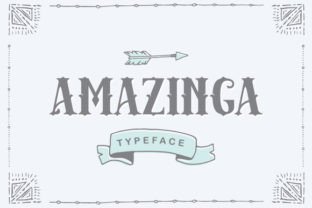
Amazinga is a display serif font rooted in Victorian style, yet it does not feel like a museum piece. Its most noticeable feature is the thick, smooth letterforms that give each character a substantial presence on the page or screen. Unlike many Victorian-inspired fonts that lean heavily into elaborate curls and thin hairlines, Amazinga keeps its strokes bold and even. This thickness contributes to strong legibility even at smaller sizes, which is not always the case with highly decorative serifs.
The Victorian influence appears in the serifs themselves and in the subtle flourishes that cap certain letters. But these details are restrained. The font does not try to replicate a full historical revival; instead, it filters the 19th-century aesthetic through a lens of contemporary minimalism. The result is a typeface that looks both familiar and fresh, making it suitable for projects that need a touch of vintage character without feeling dated or fussy.
Another key distinction is the smoothness of the curves. The letterforms flow without abrupt transitions, which gives the font a polished, almost luxurious feel. This quality makes Amazinga particularly effective in contexts where you want to communicate quality, care, and a sense of occasion — think event invitations, premium packaging, or brand wordmarks that need to convey heritage.
How Amazinga Compares with Other Display Serif Options
When you evaluate Amazinga alongside other display serif categories, several practical differences emerge. Understanding these can help you match the font to your specific project needs.
Versus Highly Ornate Victorian Fonts
Traditional Victorian fonts often feature extreme contrast between thick and thin strokes, elaborate swashes, and dense ornamentation. These can be stunning for large headlines or decorative elements, but they become difficult to read in longer text or at smaller sizes. They also tend to dominate a layout, leaving little room for other design elements.
Amazinga takes a different approach. By keeping strokes thick and consistent, it retains Victorian character while improving legibility and versatility. If you need a font that works across multiple applications — a hero headline, a subheading, and maybe even a short paragraph — Amazinga gives you more flexibility than a purely ornate Victorian typeface. You lose some of the intricate detail, but you gain usability across a wider range of formats.
Versus Modern Slab Serifs
Slab serif fonts share the thick, blocky serifs that give Amazinga its weight, but they tend to have a more mechanical, industrial feel. Slab serifs often come from a 19th-century advertising tradition, but their modern revivals prioritize geometric consistency and neutrality. They are excellent for bold headlines and digital interfaces, but they rarely carry the warmth or decorative personality that a Victorian-inspired font offers.
Amazinga sits between these two worlds. It has the solid presence of a slab serif but adds a layer of elegance through its curved terminals and Victorian details. This makes it a strong choice when you want the impact of a bold serif but need a softer, more approachable tone.
Versus Script and Handwritten Fonts
For projects like wedding invitations or feminine branding, script fonts are a common default. They offer fluidity and a personal touch. However, scripts can suffer from legibility issues, especially in all-caps settings or when used for addresses, dates, or smaller body text. Amazinga provides an alternative: it delivers a sense of formality and elegance through its serif structure rather than through cursive strokes. This can be an advantage when you need a formal look without sacrificing quick readability.
Strengths and Best-Fit Use Cases
Amazinga's combination of thick letters, smooth curves, and restrained ornamentation makes it a natural fit for several types of projects.
- Wedding invitations and stationery. The Victorian elegance pairs well with traditional ceremony themes, while the strong legibility ensures that names, dates, and locations are easy to read. Many designers pair Amazinga with a light, airy sans-serif for body text to balance the weight.
- Logos and wordmarks. Brands in the luxury, hospitality, and creative services sectors can use Amazinga to signal quality and attention to detail. The thick strokes hold up well in small applications like business cards and social media avatars.
- Posters and large-format prints. Because the letterforms are bold and smooth, Amazinga performs well at large sizes where decorative fonts might become overwhelming or lose clarity. It commands attention without shouting.
- Product labels and packaging. Items such as wine labels, artisanal food products, or handmade goods benefit from the vintage-modern balance. The font suggests craftsmanship without feeling like a superficial retro imitation.
Another strength is the font's adaptability across both print and digital environments. The thick strokes reduce the risk of thin lines disappearing on screen, and the overall shapes remain recognizable even at reduced sizes. For designers who need one typeface to work across a campaign — from a website hero image to a printed brochure — Amazinga offers consistency.
Tradeoffs and Limitations to Consider
Every typeface involves tradeoffs, and Amazinga is no exception.
Limited versatility for body text. Like most display serifs, Amazinga is not designed for long reading passages. Its thick strokes and decorative details become tiring in extended paragraphs. If your project includes more than a few lines of continuous text, you will need a complementary font for the body copy, typically a clean sans-serif or a straightforward text serif.
Distinctive personality may not suit every brand. The Victorian influence gives Amazinga a specific character. This is an advantage when the project aligns with that aesthetic, but it can be limiting if you want a neutral or purely modern voice. Brands targeting a ultra-contemporary, minimalist, or tech-forward audience may find the font too traditional.
Pairing requires attention. Because Amazinga carries strong visual weight, it needs a carefully chosen partner font. A poorly matched secondary typeface can create a jarring contrast or dilute the intended mood. This is not a limitation unique to Amazinga, but it is worth factoring into your workflow, especially if you work under tight deadlines where font exploration time is limited.
Consider licensing and availability. Depending on where you obtain Amazinga, the licensing terms may vary. Commercial use, embedding in digital products, or use in logo designs sometimes requires specific licenses. Always check the terms before committing to a project.
When Another Font May Be a Better Fit
There are situations where a different display serif or an entirely different font category will serve your purposes more effectively.
- If you need extreme contrast and drama. Some projects call for the high-shine, high-drama look of a true Victorian revival with hairline strokes and extravagant swashes. Amazinga's thick, smooth letters do not provide that level of contrast. In such cases, a font built on extreme stroke variation will deliver more impact.
- If your project demands neutrality. For corporate reports, academic materials, or any context where the font should recede into the background, Amazinga's personality may be too pronounced. A classic typeface such as Garamond or a modern sans-serif would likely be more appropriate.
- If the audience skews young and casual. A brand targeting Gen Z or a very informal audience might find Amazinga too formal. In those contexts, a rounded sans-serif or a quirky custom typeface may better communicate the desired tone.
Making an Informed Decision
Choosing a display serif like Amazinga comes down to matching the font's strengths to your project's goals. If you need a typeface that conveys elegance and solidity without sacrificing readability, and if your design brief allows for a vintage-inspired but modernized aesthetic, Amazinga is worth testing. Its thick smooth letters perform well across a range of formats, from posters to labels to logos, and its restrained decorative touches add character without overwhelming other elements.
At the same time, be honest about the limitations. If your project relies heavily on long-form text, or if the brand identity demands a more neutral or ultra-modern voice, Amazinga may not be the best fit. In those cases, treat it as an option to know about rather than one to force into the wrong context.
The most effective designers build a mental library of typefaces, not just as names but as tools with specific strengths and boundaries. Amazinga earns a place in that library for anyone who works with display serifs, wedding stationery, branding, or any project where a blend of Victorian charm and modern clarity is the right note to strike. Test it against your actual content, pair it with care, and let the project speak for itself.