Intrepid: The Adventurous Font That Elevates Logos and Badges
If you have spent any time browsing typefaces for a bold new brand identity, you have probably come across Intrepid. It calls itself an adventurous font, and it delivers on that promise. But here is the thing many people get wrong from the start: they treat Intrepid like any other display font, slapping it onto a design without understanding what makes it work. That is a fast track to a logo that feels forced rather than fearless.
Intrepid is not a neutral workhorse. It has personality, structure, and a distinct voice. When used well, it gives logos and badges a rugged, confident edge that feels both handcrafted and deliberate. When used poorly, it creates visual noise, confuses your audience, and undermines the very message you are trying to send. Let us walk through the most common pitfalls so you can skip the frustration and get the result you actually want.
Mistaking "adventurous" for "illegible"
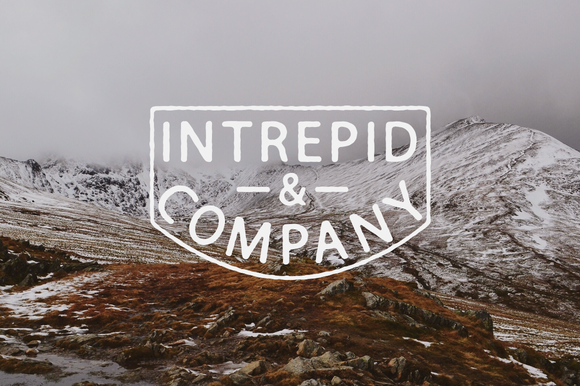
The most frequent misunderstanding people have about Intrepid is equating its adventurous spirit with a license to ignore readability. Intrepid has strong serifs, uneven strokes, and a distinct rough-hewn quality. That is exactly why it works for badges and logos. But those same qualities can make text hard to parse if you push the concept too far.
I have seen designers choose Intrepid for a wordmark and then squeeze the letters together until they overlap, thinking it adds to the rugged look. In reality, it turns a bold statement into an unreadable jumble. A badge that nobody can read does not build trust. It frustrates people, and frustration is the opposite of the adventurous, open-door feeling you want your brand to project.
How to avoid this mistake: Always test Intrepid at the size it will actually be used. If you are placing it on a small badge, a patch, or a website header, reduce the tracking just enough to keep it tight but never so tight that descenders and ascenders collide. Give each letter room to breathe. Intrepid already has plenty of visual weight. You do not need to crowd it to make it feel bold.
Using Intrepid for every part of a design
Another common error is using Intrepid for everything in a single composition. Because it has such a strong personality, it competes with itself when you put it in multiple roles. A logo that uses Intrepid for the main wordmark, a tagline, and every supporting element quickly becomes chaotic. The font is adventurous by design, but that adventure needs a guide.
I worked with a small coffee roastery that wanted a badge-style logo for their bags. They initially set their entire identity in Intrepid, from the company name to the roast level to the origin notes. The result was overwhelming. Every element was shouting. There was no hierarchy, no quiet space for the eye to rest.
A better approach: Reserve Intrepid for the hero element of your design. In a badge, that is usually the name of the organization, the club, or the event. Pair it with a clean, neutral sans-serif or a simple slab serif for supporting text. That contrast gives Intrepid room to shine without competing. The adventure stays focused, and the design becomes easier to read and more professional.
Neglecting spacing and kerning in badge layouts
Badges place unique demands on type. Circular layouts, curved text, and tight framing can expose every flaw in spacing. Intrepid, with its irregular letterforms, requires special attention here. Many designers assume that because the font looks handmade, spacing can be loose and organic. That is not quite right.
Organic does not mean sloppy. When letters appear unevenly spaced in a badge, it reads as carelessness, not character. The adventurous look you are after comes from the shape of the letters, not from ignoring the fundamentals of typography.
What you should check before finalizing: Zoom in and look at the spaces between specific letter pairs. Common trouble spots include combinations like r followed by n, or a followed by v. These pairs can create optical gaps or tight spots that throw off the whole layout. Manually adjust kerning in your design software until the rhythm feels consistent. A well-spaced Intrepid badge feels sturdy and intentional. A poorly spaced one feels unfinished.
Ignoring scalability across media
Intrepid was designed with a certain boldness that looks fantastic on a large poster or a high-resolution screen. But badges and logos travel. They end up on embroidery, foil stamps, social media avatars, favicons, and small print. If you only check how Intrepid looks at full size, you are setting yourself up for disappointment.
I have seen entrepreneurs invest in a beautiful Intrepid-based logo, only to discover that when they shrink it down for their Instagram profile, the fine details of the serifs disappear and the letterforms become muddy. That is not a failure of the font. It is a failure to plan for its limitations.
Practical advice: Create a responsive system for your Intrepid-based logo. At larger sizes, you can use the full, detailed version of the font with all its adventurous quirks. At smaller sizes, consider a simplified version, a monogram, or a pairing that keeps the spirit but improves legibility. If you are using Intrepid for a physical badge that will be embroidered, ask your production partner for a thread count simulation. Some details may need to be thickened or simplified to survive the embroidery process.
Forgetting about brand consistency
Intrepid makes a strong first impression. That is its superpower. But a brand is not built on first impressions alone. It is built on consistency across every touchpoint. A common mistake I see is people falling in love with Intrepid for their logo but then never using it again anywhere else in their brand system. The font feels disconnected from the rest of the visual identity.
Alternatively, some brands go too far the other way and try to use Intrepid for everything, including body text, email signatures, and form labels. That does not work either. The font is too distinctive for long reading, and it lacks the neutrality needed for functional text.
How to find the right balance: Use Intrepid as your accent font. Let it anchor your logo and badge work. Then build a secondary type system around it. Pull a color or a texture from the serif shapes of Intrepid and echo that in your supporting materials. Even small echoes, like using the same angle in a geometric pattern or the same weight in a border, create cohesion. Your audience will feel the connection even if they cannot name it.
Choosing Intrepid for the wrong kind of brand
Not every brand needs an adventurous font. This sounds obvious, but I have seen people choose Intrepid because they like the look of it, even when their brand values are centered on precision, calm, or minimalism. The font has a specific voice, and that voice does not fit every story.
Intrepid works best for brands that want to communicate toughness, exploration, craftsmanship, tradition with a twist, or outdoor authenticity. Think outfitters, breweries, barbecue joints, woodworkers, motorcycle clubs, adventure guides, and heritage apparel. If your brand is more about gentleness, luxury minimalism, or high-tech precision, Intrepid may fight against your message rather than support it.
Before you commit: Write down three core brand attributes. Then ask yourself honestly whether Intrepid reinforces or distracts from each one. If you find yourself trying to justify a mismatch, trust that instinct. There are plenty of adventurous fonts, and one of them will fit your brand without forcing the story.
Overlooking the cost of a full license
Intrepid is not always free. Many versions available for download come with limited licensing, especially for commercial use. A mistake I see frequently is someone downloading a free version of the font for a personal project, falling in love with it, and then trying to use that same file for a client logo. That can create legal problems down the road.
What to check before downloading: Always read the license agreement. If you are using Intrepid for a logo or badge that will be part of a brand you monetize, purchase a commercial license from a reputable foundry. The cost is usually modest compared to the total investment in your brand assets, and it protects you and your client from future disputes. If you are testing the font for a project, use a trial version first, but never ship a final product without proper licensing.
Thinking of Intrepid as a shortcut to adventure
This is the subtlest mistake of all. Intrepid looks adventurous, but a font alone cannot make a brand feel daring. I have seen people choose Intrepid and then surround it with generic stock photos, flat colors, and uninspired layouts. The font becomes a costume rather than a true expression of the brand's character.
Adventure in branding comes from the whole system: the story, the imagery, the materials, the customer experience. Intrepid can be the flag you carry, but it cannot do the walking for you. If your brand does not actually deliver on the promise of adventure, the font will feel hollow, and your audience will sense it.
A better way: Let Intrepid be the visual anchor of a broader effort. Pair it with rough textures, natural materials, photography that shows real movement, and copy that speaks directly to the explorer mindset. When the font and the message align, the result is authentic, not cosmetic.
Final checks before you commit to Intrepid
Before you finalize your logo or badge, run through this short list. Test readability at three different sizes. Confirm that spacing and kerning are consistent. Pair Intrepid with a neutral supporting font and see how they work together. Check your licensing. And most importantly, ask yourself whether the font genuinely reflects the character of what you are building.
Intrepid is a fantastic tool when used thoughtfully. It brings warmth, strength, and a sense of discovery to logos and badges that need to stand out. But like any tool, it works best when you understand its strengths and limits. Avoid these common mistakes, and you will end up with a design that feels adventurous without ever feeling careless.