Gaitera Ball: A Handwritten Typography with Character and Compact Charm
When you are choosing a typeface for a project, the options can feel endless. You might be looking for something that feels personal without being distracting, or distinctive without sacrificing readability. Gaitera Ball is a handwritten typography made with a very big spherical tip pen, and it offers a unique balance of friendliness and compact efficiency. Whether you are designing posters, social media graphics, or print materials, understanding what this typeface brings to the table can help you decide if it fits your needs.
What Gaitera Ball Is and What Makes It Distinct
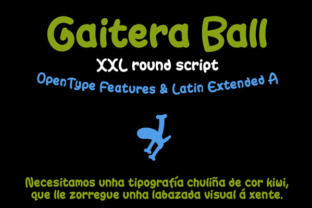
Gaitera Ball is not your average handwritten font. Its most defining characteristic is the tool used to create it: a very large spherical tip pen. This gives the letterforms a rounded, generous stroke that feels approachable and warm. The friendly appearance is immediate, making it a strong candidate for titles and short headlines where you want to convey a sense of handmade, manuscript-style authenticity.
Beyond the tool, the typography features short ascenders and descenders. In practical terms, this means the parts of letters that rise above the x-height (like the top of a "d" or "h") and those that fall below the baseline (like the tail of a "g" or "y") are relatively compact. Combined with proportional capital letters, Gaitera Ball achieves a very dense, space-efficient look. This is unusual for a handwritten typeface, which often leans toward tall, sweeping strokes or exaggerated flourishes.
For adults comparing typography options, this compactness can be a decisive factor. It allows you to fit more text in a smaller area without losing the handmade feel. The overall impression is one of casual confidence—neither overly formal nor sloppy, but deliberate and crafted.
How Gaitera Ball Compares with Other Handwritten Typography Styles
When you evaluate handwritten typography, you typically encounter several broad categories: brush script, marker-style, pencil-sketch, and ballpoint or pen-based fonts. Gaitera Ball falls into the pen-based category, but with a significant twist due to that large spherical tip.
Compared to brush scripts, which often have dramatic thick-thin variation and a more calligraphic rhythm, Gaitera Ball is more uniform in stroke width. This makes it less ornate and more consistent, which can be an advantage when you need legibility at smaller sizes or in busy layouts. Brush scripts can feel artistic but sometimes struggle with clarity, especially for titles that need to be read quickly.
Against marker-style fonts, which are often bolder and more aggressive, Gaitera Ball feels softer and more inviting. Marker fonts can convey urgency or informality, but they can also come across as rough. Gaitera Ball, by contrast, retains a polished roughness—it looks handwritten but not rushed. The spherical tip creates rounded ends and smooth curves that are pleasing to the eye.
Standard ballpoint pen fonts exist, but they typically use a finer tip, resulting in thinner lines and a more delicate appearance. Gaitera Ball stands out because the larger tip produces a bolder, more substantial stroke. This gives it more visual weight and presence, making it better suited for headlines and display use rather than body text.
In short, Gaitera Ball occupies a middle ground: it is handcrafted enough to feel personal, but compact and consistent enough to function reliably in design contexts where space and clarity matter.
Strengths and Tradeoffs of Gaitera Ball's Compact Design
The compact nature of Gaitera Ball is both its greatest strength and its most important tradeoff. Let us look at each side.
Strengths
Space efficiency. Because ascenders and descenders are short, lines of text sit close together without feeling cramped. This is ideal for posters, banners, or any medium where vertical space is limited. You can fit a multi-line title in a smaller area than you could with a more sprawling handwritten font.
Consistency across letters. Proportional capital letters ensure that each uppercase character takes up its natural width, avoiding the uneven spacing that can plague some display fonts. This contributes to a smoother reading experience, even when the text is set at a larger size.
Friendly tone without being childish. The rounded strokes give Gaitera Ball a warm personality, but the compact proportions keep it from looking overly playful or juvenile. This makes it suitable for projects targeting adults—think event invitations, product labels, lifestyle blogs, or editorial headers.
Strong visual presence. The large spherical tip creates bold, confident lines. Even at moderate sizes, Gaitera Ball commands attention. It works well as a title font where you want the text to stand out without resorting to heavy weight or extreme contrast.
Tradeoffs
Limited legibility at very small sizes. While the compact design helps, the handwritten nature means that at very small point sizes, the irregularities in stroke shape can make letters harder to distinguish. This is true of most handwritten fonts, but it is worth noting if you plan to use Gaitera Ball for subheadings or captions. Test it at your intended size before committing.
Not ideal for long body text. Gaitera Ball is designed for titles and short messages. Its manuscript style, while charming, becomes tiring to read over long paragraphs. The uniformity of stroke width and the compact spacing can make extended text feel dense and monotonous. For body copy, a more conventional serif or sans-serif font would serve better.
Less versatility in formal contexts. The friendly, handwritten aesthetic may not suit corporate reports, legal documents, or other professional settings where a neutral or authoritative tone is expected. Gaitera Ball carries personality, and that personality may not align with every brand or project.
Best-Fit Situations for Gaitera Ball
Knowing where a typeface shines makes it easier to decide when to use it. Gaitera Ball performs best in scenarios that benefit from a personal, handcrafted touch combined with efficient use of space.
- Posters and flyers. Whether for a community event, a sale, or a creative workshop, Gaitera Ball gives titles an inviting, human feel. Its compactness lets you include more information or larger text without overwhelming the layout.
- Social media graphics. On platforms where attention spans are short, a friendly, bold headline can stop the scroll. Gaitera Ball works well for quote cards, announcements, or promotional images.
- Product labels and packaging. For artisanal or handcrafted products, the manuscript style reinforces a sense of authenticity. Think jam jars, candle labels, or small-batch cosmetics.
- Menu headers and signage. Restaurants and cafes often want a look that feels approachable but not sloppy. Gaitera Ball can deliver that balance, especially for section titles or featured items.
- Editorial and blog headers. If your publication or website values a conversational tone, using Gaitera Ball for section titles or pull quotes can reinforce that voice.
In each of these cases, the typeface adds character without demanding excessive space. It works as a complement to simpler, more neutral fonts for body text.
When Another Option May Serve Better
No single typeface is right for everything, and Gaitera Ball has clear boundaries. If your project requires any of the following, consider looking at other handwritten or display options.
High formality. For luxury brands, legal documents, or academic publications, the handwritten style may feel too casual. A script with more elegant proportions or a refined serif would communicate the desired tone more effectively.
Extended reading. If you need to communicate paragraphs of information, Gaitera Ball is not the right choice. Even in a large size, the handwritten irregularity slows reading speed. Pair it with a clean body font instead.
Very small text. For footnotes, disclaimers, or fine print, the compact but irregular letterforms may become illegible. In those cases, a simpler sans-serif or a specialized small-text font will perform better.
Minimalist or ultra-modern designs. Gaitera Ball has a distinct handmade character. If your aesthetic leans toward strict minimalism, geometric sans-serifs, or futuristic styles, this typeface will clash. Its warmth is a feature, but not one that fits every visual language.
When you are comparing options, think about the overall mood and functional requirements of your project. Gaitera Ball excels in specific contexts, and recognizing those limits is part of making an informed choice.
Decision Factors for Choosing Gaitera Ball
To help you evaluate whether Gaitera Ball is the right fit, consider these factors:
- Project tone. Does it call for something friendly, personal, and slightly informal? If yes, Gaitera Ball is a strong candidate. If the tone needs to be authoritative or neutral, look elsewhere.
- Space constraints. Are you working with limited vertical space? The short ascenders and descenders make Gaitera Ball a practical choice for tight layouts where you still want a handwritten feel.
- Audience. Are your readers adults who would appreciate a crafted, manuscript style? The font avoids being overly cute or trendy, which gives it a broader appeal among grown audiences.
- Pairing possibilities. Do you have a reliable body font to pair with it? Gaitera Ball works best as a display or title face, so you will need a simpler companion for longer text. Test combinations early in your design process.
- Size and medium. Will you be using it at a size where its details are visible? At larger sizes, the spherical tip strokes become a feature. At small sizes, the charm may fade. Consider where your text will appear—print, screen, large format, or small.
By weighing these factors, you can decide if Gaitera Ball aligns with your goals. It is not a one-size-fits-all solution, but for the right project, it offers a distinctive blend of warmth and efficiency that is hard to replicate.
Practical Comparison: Gaitera Ball Versus a Typical Brush Script
To make the differences concrete, imagine you are designing a poster for a weekend farmers market. You have two typeface candidates: Gaitera Ball and a popular brush script.
The brush script gives you sweeping strokes, dramatic contrast between thick and thin lines, and a dynamic, energetic feel. It looks artistic and hand-painted. However, its tall ascenders and descenders mean you need more vertical space for each line. If your poster has multiple lines of text, you may have to shrink the font size or reduce the message to fit.
Gaitera Ball, on the other hand, provides a similarly handmade look but with more compact proportions. The round, consistent strokes feel friendly and approachable, and the shorter ascenders and descenders let you stack lines more tightly. You can keep the same font size and fit more information, or increase the size for greater impact without sacrificing layout space.
Which is better? It depends on your priorities. If you want dramatic flair and have room to let the letters breathe, the brush script may win. If you need efficiency and a warmer, less aggressive tone, Gaitera Ball is the stronger choice. Neither is objectively superior; they serve different needs.
Final Thoughts on Gaitera Ball
Gaitera Ball is a thoughtfully designed handwritten typography that brings together two qualities that often conflict: personality and practicality. Its large spherical tip pen origin gives it a distinctive, friendly look, while its short ascenders, short descenders, and proportional capitals make it unusually compact for a manuscript-style font.
For adults who are evaluating typography options for titles, headers, or display text, Gaitera Ball is worth considering when the project needs a human touch without sacrificing layout efficiency. It is not a replacement for every handwritten font, nor should it be used for every purpose. But when the context calls for warmth, space economy, and a crafted feel, it delivers.
As with any design choice, the key is to match the tool to the task. By understanding what Gaitera Ball does well—and where its limits lie—you can make a confident decision that serves your content and your audience.