Turning and Curling: The Art of Feminine Typography in Modern Design
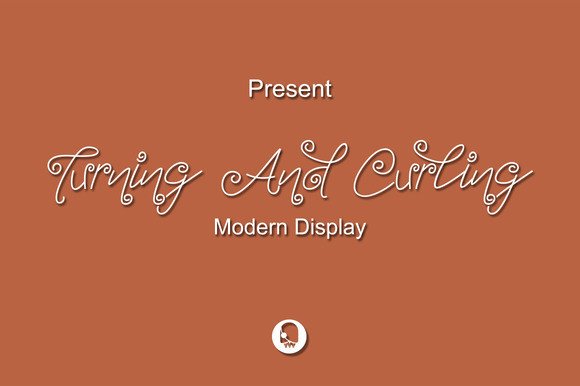
Typography is not merely about legibility; it is a powerful tool for evoking emotion, setting a tone, and communicating personality. Among the vast landscape of display fonts, few capture the delicate balance of playfulness and sophistication quite like Turning and Curling. This curled monoline font, with its distinctive loops and graceful strokes, has carved a niche for itself in the world of feminine and girly design. Its charm lies not in loud proclamation but in subtle authenticity, offering creators a way to infuse projects with a handcrafted, whimsical quality that feels both nostalgic and fresh.
In an era where digital design can sometimes feel cold and impersonal, fonts like Turning and Curling serve as a bridge back to the tactile and the human. The curled monoline structure provides a consistent line weight, ensuring that the playful curls do not compromise readability or visual harmony. This makes it particularly effective for headlines, logos, and branding materials where the goal is to capture attention without overwhelming the viewer. The font’s design whispers rather than shouts, making it a darling among designers seeking authenticity in their creative projects.
Understanding the Aesthetic of Monoline Curls
The term “monoline” refers to a consistent stroke width throughout each character. Unlike traditional calligraphic fonts that vary in thickness, a monoline font maintains uniform weight, resulting in a clean, modern look. When combined with curling terminals and looping ascenders, the effect is whimsical yet polished. Turning and Curling exemplifies this perfect union. The curls are not arbitrary; they follow a rhythmic pattern that guides the eye across the text, creating a gentle flow that is pleasing to read in short bursts.
This aesthetic is especially effective in feminine design contexts, where softness and elegance are prioritized. The curls evoke imagery of ribbons, vines, or delicate handwriting, instantly communicating warmth and approachability. Designers often pair Turning and Curling with a clean sans-serif body font to balance its ornamental nature. The contrast highlights the charm of the curled elements while ensuring the overall composition remains professional and uncluttered.
- Consistency: The monoline structure ensures that even with intricate curls, each character maintains visual harmony with the next.
- Versatility: Works well for both digital interfaces and physical print, scaling beautifully from badges to poster headlines.
- Emotional tone: Evokes nostalgia, playfulness, and a sense of handmade care, aligning with modern desires for authentic design.
Practical Applications Across Creative Domains
The true strength of Turning and Curling lies in its adaptability to a wide range of creative projects. While it is undeniably darling and girly, its application extends far beyond traditional feminine stereotypes. Hobbyists and business owners alike can leverage its unique voice to differentiate their branding.
Branding and Logo Design
For businesses targeting a female-centric audience—such as boutiques, bakeries, florists, beauty salons, or childcare services—a curved, playful logo can create immediate emotional resonance. Turning and Curling works exceptionally well as a logotype because its curls can be exaggerated or simplified depending on the brand’s needs. A wedding planner might use the full flourish, while a modern skincare line might adopt a more restrained version, letting the subtle curls add just a hint of softness.
Digital Media and Social Graphics
In the fast-paced world of social media, fonts that stand out without screaming are gold. Turning and Curling is perfect for Instagram quotes, Pinterest pins, or TikTok overlays where a girly aesthetic is desired. Its legibility in large sizes ensures that key messages are clear, while the curls add a distinctive visual signature that followers come to recognize. Content creators often use this font for titles, call-to-action buttons, or highlight overlays, creating a cohesive brand identity across platforms.
Print and Stationery
There is a particular charm in seeing Turning and Curling on physical paper. Invitations, greeting cards, thank-you notes, and journal covers benefit from the font’s tactile warmth. The curled monoline style mimics hand-lettering, making printed materials feel personal and bespoke. Educators and researchers working on creative projects—such as workshop materials or presentations on typography and gender in design—can use this font to visually underscore themes of femininity, craft, and individuality.
- Wedding stationery: Save-the-dates, invitations, and place cards gain a romantic flair.
- Product packaging: Small-batch goods, candles, and handmade soaps can use the font to signal artisan quality.
- Children’s materials: Storybook covers, activity sheets, and classroom decorations become more inviting.
Technical and Practical Considerations for Creators
While Turning and Curling is a darling font for feminine designs, using it effectively requires understanding its technical characteristics and limitations. Like all display fonts, it is not intended for lengthy body text. The curls, while beautiful, can become tiring when used in paragraphs. Best practices include reserving the font for headlines, subheadings, or single-line accents.
Another important factor is contrast. Because the monoline stroke stays consistent, the font can appear light in weight. Against a busy background, some details might get lost. Pairing Turning and Curling with a semi-bold or bold sans-serif font for secondary text creates a hierarchy that is both functional and attractive. Consider color palettes that complement the girly aesthetic—pastels, golds, ivories, or soft corals—to maximize the visual impact.
- Scale appropriately: Use large sizes (36pt and above) for headlines; avoid using below 18pt for readability.
- Limit character count: Keep lines short; longer phrases can be broken into multiple lines to preserve the curl rhythm.
- Mind the spacing: Adjust tracking (letter-spacing) slightly wider to give curls room to breathe.
- Test on backgrounds: Ensure sufficient contrast, especially on textured or patterned backdrops.
Pairing with Other Fonts
A skilled designer knows that every font needs a partner. Turning and Curling pairs beautifully with geometric sans-serifs like Montserrat or circular fonts like Nunito, which provide a steady baseline for the curls to dance above. For a more vintage feel, a serif like Playfair Display can introduce an elegant contrast. When pairing, focus on weight and x-height compatibility. The curly font should always be the star, while the companion font supports without competing.
The Emotional and Cultural Resonance of Curled Typography
Beyond its practical uses, Turning and Curling taps into deeper cultural and emotional currents. In design, “girly” has often been dismissed as frivolous, yet fonts like this one challenge that perception. They celebrate delicacy, decoration, and detail—qualities that require immense skill to execute without tipping into chaos. For women entrepreneurs, female creators, and anyone building brand identities around softness and care, this font becomes a statement of pride rather than a nod to stereotype.
Researchers studying typography and gender symbolism note that curved, handwritten fonts tend to evoke trust, warmth, and emotional safety. Turning and Curling aligns with these findings, offering a visual language that feels open and inviting. In a world saturated with sleek, minimal, and masculine-leaning typefaces, the resurgence of decorative fonts like this one reflects a broader cultural shift toward embracing individuality and emotional expression in design.
Workflow Integration and Creative Experimentation
For hobbyists and professionals alike, integrating Turning and Curling into a workflow is straightforward. Most design software—Adobe Illustrator, Canva, Procreate, and even web design tools—support standard font formats. Because it is a display font, it works best when used sparingly but intentionally. One powerful technique is to use the font for initials or drop caps at the beginning of a paragraph, creating a focal point that draws the reader in.
Experimentation is encouraged. Try overlapping the font with floral patterns, watercolor textures, or geometric shapes. The authenticity of the curled monoline design shines when juxtaposed with natural elements, reinforcing the handcrafted feel. Similarly, animating the font in video projects—where curves gently bend or expand—can create captivating motion graphics ideal for brand intros.
- Watercolor backgrounds: The irregular edges of paint contrast with the uniform monoline, elevating the handmade aesthetic.
- Layered typography: Combine with bold sans-serif for a modern twist on girly design.
- Gradient fills: Soft ombré effects highlight the curls and add depth.
Observations from the Design Community
Over the past years, the design community has seen a notable return to decorative and expressive fonts, particularly in the indie and small-business sectors. Turning and Curling is frequently mentioned in forums and tutorials as a go-to for feminine branding. Designers appreciate its balance—curly but not overly complex, girly but not saccharine. It bridges the gap between the polished and the personal, making it suitable for everything from a high-end bridal magazine spread to a children’s book cover.
One recurring observation is that the font works particularly well when paired with hand-drawn illustrations. Whether it’s floral motifs, stars, or abstract doodles, the curls create a visual rhythm that harmonizes with organic shapes. This makes Turning and Curling a favorite among illustrators and lettering artists who want to maintain a handcrafted look without drawing letters from scratch.
A Practical Guide for Business Owners
If you are a business owner considering Turning and Curling for your brand, start small. Use it exclusively for your logo and main headline. Test how it appears on your website header, social media profile, and business card. Observe customer reactions: does it feel approachable? Does it communicate the right personality? Because the font carries strong feminine connotations, ensure it aligns with your brand voice. A law firm or tech startup might find it too delicate, but a bakery, florist, or lifestyle coach will likely find it perfectly attuned.
For educators and researchers, the font can serve as a case study in the power of typography to influence perception. Use it in presentations or infographics to illustrate concepts of gender, design history, and emotional branding. The curls themselves become discussion points about decoration versus function, tradition versus modernity, and how subtle design choices can carry significant cultural weight.
Final Thoughts on Authenticity and Expression
In the end, the value of any font lies in its ability to communicate a feeling. Turning and Curling succeeds because it feels authentic. It does not pretend to be something it is not—it is unabashedly darling, curled, and girly. For creators looking to add warmth, charm, and a sense of personal touch to their projects, this curled monoline font offers a reliable and beautiful tool. Its limitations (avoid for long body text, mind the contrast) are easily managed with thoughtful design. Its strengths (emotional resonance, visual interest, versatility in short-form content) make it an invaluable addition to any designer’s palette.
Whether you are a hobbyist making wedding invitations, a professional branding a boutique, or a researcher exploring the semiotics of type, Turning and Curling invites you to embrace the playful elegance of curling lines. In a world that often prizes minimalism and restraint, this font argues for the power of decoration, the beauty of whimsy, and the authenticity of a well-placed curl.