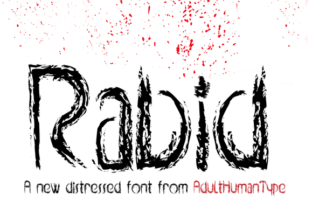
Rabid Font: A Messy, Distressed Display Typeface with Bite
You know that moment when a font looks like it’s been dragged through a puddle of ink, smudged by a charcoal stick, then splattered with something red? That’s Rabid in a nutshell. It’s a display font that doesn’t just sit on the page—it screams, scratches, and leaves a trail of chaos. If your project needs raw attitude, grit, or a slightly unhinged personality, Rabid might be exactly what you’ve been hunting for.
What Makes Rabid Different?
Most display fonts play it safe—they’re bold but clean, dramatic but legible. Rabid takes the opposite route. Every character looks like it was drawn with a piece of charcoal that’s crumbling, then smeared with a chalky finish. The strokes are uneven, the edges are rough, and there’s an overall “messy” vibe that feels deliberate rather than accidental. Toss in a splash of red, and those same strokes suddenly resemble blood spatter. It’s not subtle, and that’s the whole point.
The typeface lives in the space between horror, punk, and underground art. It’s not a serif font or a sans serif font—it’s a handwritten font that’s been through the wringer. The glyphs include all those pesky foreign characters (accents, diacritics, the works), which means you can use it for multilingual projects without breaking a sweat. And yes, the “Why SO Serious” tagline fits perfectly—Rabid doesn’t take itself too seriously, but it delivers serious visual impact.
Where Rabid Shines in Design Projects
Because Rabid is a premium font with a very specific personality, it’s not for body text or corporate letterheads. It’s built for places where you want people to stop scrolling, pause, and feel something. Here are a few sweet spots:
- Brand identity for edgy brands – Think tattoo parlors, horror-themed escape rooms, heavy metal bands, or streetwear labels. Rabid’s chaotic energy instantly communicates “we don’t follow rules.”
- Event posters and flyers – Halloween parties, underground gigs, film festivals, or any event that needs a visceral, in-your-face title. The distressed texture works wonders in print.
- Packaging design – Hot sauce, craft beer, artisanal hot sauces, or limited-edition products. A splash of red paired with Rabid’s chalky strokes makes the packaging feel tactile and handmade.
- Social media graphics – In a feed full of polished sans serifs, Rabid stands out like a graffiti tag. Use it for quote cards, announcements, or teaser posts that need a rebellious kick.
- Editorial design – Magazine covers, zines, or book covers in the horror, punk, or alternative genres. Rabid works best as a headline or pull quote, not for full paragraphs.
Modern typography often leans on clean lines, but Rabid proves that messiness has a place. It’s a creative font that thrives on contrast—pair it with a simple sans serif for body copy, and the headlines will hit twice as hard.
How Messy Typography Influences Perception and Hierarchy
Typography isn’t just about readability—it’s about feeling. When you use a typeface like Rabid, you’re telling your audience, “This is not polite. This is raw.” That emotional shortcut can be incredibly powerful for brand identity and audience engagement.
- Readability vs. impact – Rabid sacrifices some readability for personality. That’s fine for headlines and logos, but don’t expect it to work in long paragraphs. The irregular strokes and rough edges make each letter feel urgent, almost aggressive.
- Visual hierarchy – Use Rabid for the most important element (the title or call-to-action) and let cleaner fonts handle the details. The contrast between Rabid and a neutral serif font or a simple sans serif instantly elevates the headline’s dominance.
- Brand perception – If your brand is about rebellion, authenticity, or craftsmanship, Rabid reinforces that perception. It feels hand-drawn, not machine-made. That’s a huge plus for entrepreneurs and small business owners who want to convey a homemade or artisanal feel.
- Consistency and recognition – Using a distinctive display font consistently across marketing materials builds visual recall. People will remember your poster, your packaging, or your social post because the typeface is so unique.
Practical Tips for Using Rabid Effectively
I’ve worked with dozens of commercial fonts, and Rabid is one of those that demands a light touch. Here’s how to make the most of it without overwhelming your project:
Evaluate Project Fit
Before you buy, ask yourself: Does this project need grit? If the answer is yes, Rabid is a strong candidate. If you’re designing a law firm’s website or a wellness blog, probably not. Match the font’s personality to your brand’s voice.
Test Font Pairings
Rabid pairs well with clean sans serif fonts (like Montserrat, Open Sans, or Lato) and neutral serif fonts (like Georgia or Playfair Display). Avoid pairing it with another distressed or handwritten font—that’s too much chaos. The goal is to let Rabid be the star while a calm partner supports it.
Review Included Styles
Rabid comes with a single style (the messy display version) but includes extensive glyphs for international use. That’s a big win if you’re designing for multilingual audiences. Check the character set in the preview to ensure it covers your needs.
Readability Considerations
Because Rabid is heavily distressed, it can become illegible at small sizes. Use it above 36pt for print and above 48px for web. For large headlines or logos, it’s perfect. For subheadings or short phrases, test it first—some letterforms may merge or lose definition.
Commercial Licensing
Rabid is a commercial font, which means you need a license for professional use. Most foundries offer standard desktop licenses for print and static images, plus web licenses for digital projects. If you’re a small business owner or crafter, check if there’s a budget-friendly option. Don’t forget that using a premium font without a proper license can cause legal headaches down the line.
Real-World Examples and Design Observations
I recently used Rabid for a limited-edition hot sauce label. The client wanted something that felt handcrafted and dangerous. We set the brand name in Rabid at 72pt, over a dark background with a subtle red gradient behind the text. The result? The letters looked like they were bleeding into the sauce. That single choice made the product fly off shelves at a local market. The font became the entire hook—no extra illustrations needed.
Another example: a friend runs a small horror-themed escape room. She used Rabid for her flyers and social media headers. The messy, inky strokes matched the “abandoned asylum” vibe perfectly. She paired it with a clean sans serif for the rules and details. The contrast made the flyer easy to scan but impossible to ignore. In both cases, Rabid didn’t just decorate the design—it carried the emotional weight.
One caution: I’ve seen designers overuse distressed fonts in an attempt to look “edgy.” Rabid works best when it’s the only chaotic element. If your entire layout is full of grunge textures, bad kerning, and multiple wild fonts, the message gets lost. Keep the rest of your design assets clean and intentional. That way, Rabid’s personality stands out.
Final Thoughts on Choosing Rabid for Your Next Project
Selecting a display font is often a gut call, but it should also be a strategic one. Rabid is not a one-size-fits-all solution, but for projects that need a raw, unpolished voice, it’s one of the best creative fonts available. Whether you’re designing logo design drafts, packaging design concepts, or web design elements for a gritty brand, Rabid delivers that hand-done, slightly dangerous feel. Remember to test it at size, pair it wisely, and license it properly. If you do, you’ll have a typeface that doesn’t just sit on the page—it leaves a mark.