Graver: A Typeface That Carves Its Own Space in Design
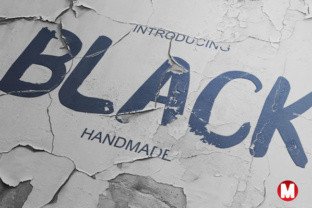
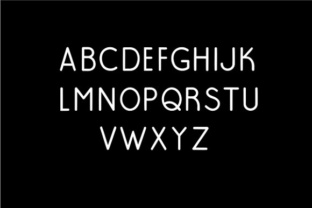
You know that moment when you’re staring at a blank canvas—digital or physical—and you need something that doesn’t just say words, but makes a statement? That’s where Graver enters the picture. It’s a simple font, sure, but there’s nothing plain about it. Designed with a foot in the grave, Graver brings a grounded, almost permanent weight to anything it touches. It works beautifully for displays of the fourth kind—those pieces that aren’t just seen, but felt. Think headlines that demand attention, signage that lingers in memory, or packaging that makes you stop mid-step. Graver doesn’t shout; it carves.
When “simple” means “unforgettable”
Graver’s simplicity is deceptive. At first glance, it reads as straightforward, maybe even stark. But that’s the point. In a world where every brand is chasing flashy effects and layered ornamentation, Graver strips things down to their bones. It’s the kind of font you reach for when you want the message itself to carry the weight, not the decoration.
Consider a local bookstore that wants to reinvent itself. They’re not a chain, they’re not trying to be trendy—they just want their name above the door to feel solid, trustworthy, and maybe a little timeless. Graver delivers that. One owner told me they paired it with a warm cream background and a single line illustration, and suddenly their storefront felt like it had been there for decades. That’s the kind of presence we’re talking about.
Who’s actually using Graver right now?
Graver has found its way into more corners than you might expect. Here’s a look at who’s working with it and why it sticks.
Independent publishers and zine makers
Small press operations and zine creators are always hunting for typefaces that feel intentional without screaming for attention. Graver fits that brief perfectly. It brings a tactile, almost letterpress quality to digital layouts. One designer I know used it as the primary display face for a collection of short stories about forgotten places. She said the font alone set the mood—no need for heavy imagery or moody filters. The letters themselves felt like artifacts.
Craft breweries and distilleries
Drinks branding has become a playground for typography, but standing out on a crowded shelf is harder than ever. Graver offers something different. It doesn’t lean into the rustic, hand-drawn look that’s everywhere right now. Instead, it gives off a refined, no-nonsense vibe. I saw a small-batch gin label that used Graver for the brand name, followed by a simple botanical sketch. The result was elegant without being pretentious. The bottle looked like it belonged on a shelf in a quiet bar, not a gift shop.
Event posters and gig flyers
Concerts, gallery openings, and community events often rely on bold typography to grab attention in a hurry. Graver works because it reads clearly from a distance, but once you’re up close, there’s a subtle character in the letterforms that rewards a second look. A friend who runs a small music venue started using Graver for their monthly poster series. He noticed that people would actually hold onto the posters after the event, pinning them up in their apartments. That’s not something you see with every font.
Displays of the fourth kind—what does that mean here?
The phrase “displays of the fourth kind” might sound abstract, but in practice, it refers to displays that break away from the standard categories we’re used to. Not a billboard, not a phone screen, not a printed page in a typical format. Think of it as the display that exists somewhere between physical and digital, or between permanent and ephemeral.
Graver shines in these spaces. Imagine a digital kiosk in a museum that switches between static information and animated text. Graver holds its own in both modes. Or consider a pop-up installation at a design fair where the signage is projected onto raw concrete. The font’s clean lines remain readable even when the surface is textured and uneven. That’s the kind of versatility that makes Graver a practical choice for people who need their typography to work across unexpected formats.
Why Graver might be the right choice for your next project
If you’re weighing options, here are a few situations where Graver tends to outperform more decorative or complex typefaces.
- When you need longevity. Trends shift fast, but Graver has a quiet permanence. A brand built around this font won’t look dated in three years. It’s not chasing a moment; it’s building a foundation.
- When your content is heavy. If you’re working with serious subject matter—memorials, historical projects, social impact campaigns—Graver lends dignity without becoming theatrical. It respects the material.
- When space is limited. On small screens or tight layouts, Graver keeps its composure. You don’t lose legibility, and you don’t have to shrink the text to the point of invisibility. It’s efficient in the best way.
- When you want to pair it with something expressive. Graver plays well with script fonts, hand-drawn elements, or even more ornate serifs. It acts as a stable anchor while other elements get to be more playful.
Common considerations before committing to Graver
No typeface is a universal solution, and Graver has its own set of trade-offs. Here’s what to keep in mind before you decide it’s the right fit.
It’s not for long-form reading. Graver is a display font through and through. You wouldn’t set a novel or a lengthy article in it—your readers would tire quickly. Reserve it for headlines, titles, short blocks of emphasis, or anything where impact matters more than endurance.
It carries a specific emotional weight. The “foot in the grave” quality is real. Graver can feel somber or serious, depending on the context. If your project calls for lightness, playfulness, or energy, you might want to look elsewhere or use Graver sparingly as a contrast element.
Pairing requires intention. Because Graver has such a distinct voice, the fonts you pair it with need to be chosen thoughtfully. A neutral sans-serif or a classic serif works well. But throwing in a font with too much personality can create visual tension. Test your combinations early, and don’t be afraid to ask for outside feedback.
Digital rendering can vary. On some screens, especially older ones, the finer details of Graver’s letterforms might soften or blur. Always preview your designs on real devices before going live. A font that looks perfect in a design mockup can behave differently in the wild.
Strengths that keep people coming back
Despite those considerations, Graver has developed a loyal following for good reason. Its biggest strength is that it doesn’t try to be everything at once. It knows what it is, and it commits. Designers who value clarity over complexity find a reliable tool in Graver. It’s the kind of font that lets the content lead, which is harder to achieve than it sounds.
Another strength is its adaptability across mediums. I’ve seen Graver used on embossed leather covers, laser-cut wood signs, and high-resolution digital banners. In each case, it retained its character without looking like it was trying too hard. That kind of flexibility saves time and mental energy when you’re juggling multiple deliverables.
A final observation
Graver isn’t the loudest font in the room, and it doesn’t need to be. If you’re creating something that demands to be taken seriously, or something that needs to last beyond the next trend cycle, it’s worth a serious look. Let Graver be your reaper—not in a grim sense, but in the sense of cutting away the unnecessary until only what matters remains. That’s the kind of design thinking that resonates with audiences who are tired of noise and hungry for meaning.