Cedge: A Versatile Typeface for Modern Design Needs
Typography often serves as the silent foundation of visual communication. When a font balances character with clarity, it can elevate a brand, clarify a message, or give a project a distinct voice. Cedge, designed by Sai Aditya, enters this space as a typeface worth examining, not for its novelty alone, but for the practical value it brings to a range of design contexts. This article unpacks what Cedge is, what distinguishes it, and who stands to benefit most from incorporating it into their work.
Understanding Cedge and Its Place in Contemporary Design
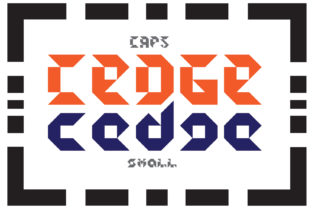
Cedge is a display-oriented typeface that blends geometric structure with subtle humanist touches. Its letterforms are clean, confident, and intentionally modern, making it suitable for headlines, branding, editorial layouts, and digital interfaces. The font was developed with a focus on legibility at larger sizes while retaining enough personality to avoid feeling cold or mechanical. The Cedge font by Sai Aditya reflects a design philosophy that values both function and expression. It does not try to be the loudest element in a composition; instead, it provides a steady, professional presence that lets content take center stage.
For designers and content creators, the choice of a typeface often comes down to how well it adapts to different media. Cedge performs across print and screen without losing its core identity. Its construction includes consistent stroke widths, open counters, and carefully calibrated spacing, which together reduce eye strain in extended reading situations and ensure sharp reproduction even at small sizes. These details matter when the audience expects clarity—whether they are scanning a headline on a mobile screen or reading body text in a printed brochure.
Key Characteristics and Design Intent
What sets Cedge apart from other modern sans-serifs is the deliberate balance between geometry and readability. The letterforms are rooted in circular and linear proportions, but Sai Aditya introduced slight variations in terminals and joins to give the typeface warmth. The result is a family of characters that feel precise without being rigid. The uppercase letters have a strong, architectural quality, while the lowercase remains approachable. This duality makes Cedge especially effective for brands that need to communicate both authority and accessibility.
The font includes a range of weights, from light to bold, each maintaining consistent color and rhythm. Supporting ligatures, stylistic alternates, and basic multilingual coverage adds flexibility for projects that require international character sets. The Cedge font also performs well in all-caps settings, which is useful for logotypes and short headings. Its x-height is relatively generous, improving readability in body text applications when set at appropriate sizes. These design choices indicate that the typeface was conceived not just for visual appeal but also for real-world practicality.
Practical Strengths in Use
In daily workflow, Cedge proves to be a reliable workhorse. Its spacing defaults are tight enough to create compact headlines but remain open for comfortable reading. Kerning pairs are consistent, reducing the need for manual adjustments in design software. This saves time during layout and revision cycles, especially for professionals handling multiple projects. The font’s weight distribution also helps maintain hierarchy across pages: a light weight for subtle captions, a medium for subheadings, and a bold for primary calls to action.
For digital products, Cedge’s readability at 14–18px on screens makes it a practical choice for dashboards, navigation menus, and online articles. Its geometric forms render cleanly on low-resolution displays without losing definition. Print applications—such as business cards, posters, and packaging—benefit from the font’s even texture, which prevents spotting or uneven ink distribution on various paper stocks. These are not hypothetical advantages but observable qualities that designers notice during production.
Quality and Craftsmanship
Evaluating a typeface’s quality involves examining its technical execution and aesthetic coherence. Cedge demonstrates careful attention to both. The curves are smooth, the junctions are clean, and the letter spacing remains uniform across weights. There is no apparent favoritism toward certain characters; each glyph receives the same level of refinement. The font includes proper diacritics and supports Central European and Latin-based languages, which broadens its usefulness for international audiences.
Sai Aditya’s design process likely involved extensive testing at different sizes and contexts, as evidenced by the font’s performance under demanding conditions. For instance, when set in reversed type (white on dark backgrounds), Cedge retains its legibility without bleeding or halation. This is a significant advantage for UI elements and event posters where contrast is critical. The font files themselves are well-hinted, which means they display accurately across operating systems and browsers without unexpected shifts in weight or width.
Who Benefits Most from Using Cedge
Given its characteristics, Cedge fits naturally into the workflows of several professional groups. Marketers and brand managers will appreciate its ability to convey a modern yet trustworthy image. A company profile, website hero section, or product packaging that uses Cedge communicates clarity and intentionality without relying on decorative gimmicks. Small business owners who manage their own materials will find the font easy to pair with other typefaces, such as a classic serif for body copy, without creating visual conflict.
Freelance designers and creative agencies can use Cedge as a primary display face for editorial layouts, portfolio sites, and client presentations. Its restraint makes it adaptable to both corporate and creative briefs. Bloggers and publishers who prioritize readability in headers can rely on Cedge to maintain consistency across devices. Educators and trainers preparing handouts or slide decks will also benefit from the font’s legibility at presentation sizes. Essentially, anyone who needs a reliable, professional sans-serif that does not fade into the background—yet does not shout for attention—will find Cedge a suitable choice.
Real-World Applications and Examples
Consider a startup launching a digital product. The landing page uses Cedge for the primary headline, a light weight for feature descriptions, and a bold variant for the call-to-action button. The consistent type hierarchy reduces cognitive load for visitors, who can quickly scan the page and understand the value proposition. In a print scenario, a restaurant menu designed with Cedge for category headings and descriptions maintains a clean, upscale appearance without sacrificing readability under dim lighting. These examples illustrate how the font supports practical goals rather than merely looking attractive.
In editorial design, Cedge works well for chapter openers and pull quotes. Its geometric proportions contrast nicely with text-heavy serif fonts, creating a visual break that guides readers through the content. For social media graphics, the font’s straightforward letterforms ensure that captions remain legible at small sizes on mobile feeds. This versatility across media types means that once a designer becomes familiar with Cedge, they can apply it to multiple projects without needing to switch typefaces constantly.
Considerations and Limitations
No typeface is universally optimal, and Cedge has contexts where it may not be the ideal choice. Its design is distinctly modern and geometric, which may clash with projects that require a traditional, handcrafted, or highly ornate aesthetic. For very small body text below 10px, especially on lower-resolution screens, the font’s fine details can become less distinct. In such cases, a more plain sans-serif with higher stroke contrast would perform better. Additionally, the font does not include extensive extended character sets like Cyrillic or Greek, which limits its use for multilingual publications targeting those regions.
Potential users should also note that while Cedge offers multiple weights, it does not include true italics; only oblique variants are available. This might disappoint designers who rely on italicized emphasis for editorial flow. However, for most branding and display work, obliques suffice. The price point and licensing terms should be reviewed, as commercial projects require proper licensing. That said, the font is reasonably accessible for independent creators and small teams.
Evaluating Long-Term Value
A typeface’s enduring value depends on how well it serves its purpose over years of use. Cedge’s neutral yet distinctive character suggests it will not become quickly dated. Its proportions are grounded in timeless sans-serif principles, with enough personality to remain interesting. For professionals building a consistent brand identity, investing in a typeface that allows scaling across formats and maintains readability is a practical decision. The Cedge font by Sai Aditya fits this criteria. It offers enough flexibility to adapt to evolving trends while staying true to a clear design language.
In comparison to other modern display fonts, Cedge holds its own when assessed on technical stability and visual coherence. Designers who have used it report minimal issues with font rendering in popular design software and web platforms. This reliability reduces the need for troubleshooting, allowing more time for creative work. As with any typeface, the final decision should come from testing it in actual project conditions. Downloading the trial version, setting sample text at intended sizes, and checking cross-device performance are recommended steps before committing to a full license.
Ultimately, Cedge succeeds as a practical tool for visual communication. It respects the reader’s experience, supports the designer’s workflow, and upholds a level of craftsmanship that inspires confidence. Whether you are a marketer building a brand platform, a freelancer assembling a client deck, or a publisher designing a magazine, Cedge provides a solid foundation. It does not promise to revolutionize typography, but it delivers consistent quality where it matters most: in the clarity and impact of your message.