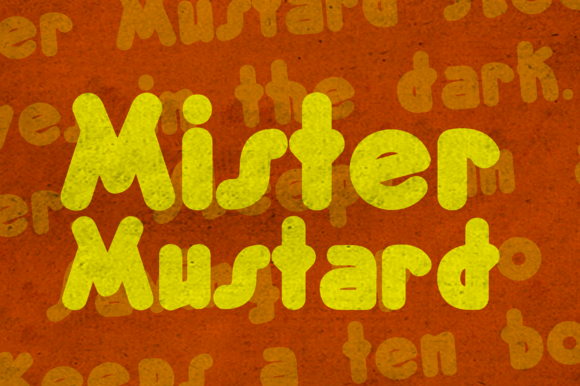
Mister Mustard: A Chubby Art Deco Font for Creative Projects
What Makes Mister Mustard Stand Out
Mister Mustard brings something rare to typography: a chubby art deco style that feels both nostalgic and fresh. Designed with rounded forms and a playful weight, this font avoids the rigid geometry many art deco typefaces lean into. Instead, it offers warmth without losing the elegance the style is known for. The result is a typeface that feels welcoming, approachable, and surprisingly versatile.
The font comes in two styles: regular and italic. Both include full uppercase and lowercase character sets, which makes Mister Mustard more adaptable than many display fonts that only offer caps. This alone opens up more natural reading experiences, whether you are setting a headline, a short paragraph, or a logo. The italic variant adds motion and emphasis without sacrificing readability, giving you room to contrast rhythm in your layouts.
Another practical advantage is the extended glyph set. Mister Mustard includes extra foreign characters, so designers working in multiple languages or with international audiences don't have to patch together fallback fonts. This is especially useful for packaging, global brand assets, or multilingual signage where consistency matters.
Where Mister Mustard Shines
Because of its chubby proportions, Mister Mustard works best at medium to large sizes. That is where its character becomes visible and its charm lands. Consider it for:
- Brand identity: Logos, wordmarks, and brand lockups benefit from the font's friendly yet structured personality. It suits food brands, creative studios, children's products, and hospitality businesses.
- Packaging and labels: The rounded shapes feel tactile and product-friendly. Use it on a mustard jar, a tea box, or a candle label to add character without shouting.
- Posters and signage: At display sizes, the chubby forms become bold anchors. The italic style adds direction and energy to event posters or directional signs.
- Social media and digital content: In a feed full of thin sans-serifs, Mister Mustard stands out. It works for quote cards, announcement graphics, and branded templates where you want personality.
- Editorial and publishing: Use it for chapter titles, pull quotes, or section headers in magazines, zines, or children's books. The lowercase keeps it from feeling too formal.
Adapting Mister Mustard for Different Audiences
One of the strengths of Mister Mustard is how differently it reads depending on your context. A freelancer designing logo concepts for a bakery will use it one way. A marketer building a campaign for a playfully branded product will use it another. The font adapts because it sits between retro and modern without committing fully to either pole.
For small business owners, Mister Mustard can form the basis of a consistent visual identity. Pair it with a simple sans-serif for body text on menus, websites, or flyers. The contrast between a chubby art deco header and a clean secondary font creates hierarchy without extra ornamentation. For educators and hobbyists, the font works well in worksheets, classroom materials, or personal projects like invitations and greeting cards. The built-in language support means you can use it for bilingual materials without switching typefaces.
Marketers and content creators should consider Mister Mustard for campaign headers where you need to catch attention but still appear approachable. It is particularly effective for limited-edition products, seasonal promotions, or brand refreshes aimed at younger demographics. The italic style adds an energetic slant that works well in motion graphics or animated social posts.
Practical Tips for Using Mister Mustard
Getting the best out of Mister Mustard requires a few practical considerations. Because the font has chubby letterforms, spacing becomes important. Avoid crowding uppercase words together at large sizes. Give each character room to breathe. In most design software, you can adjust tracking slightly upward when using all caps to maintain legibility.
For body text or longer passages, stick to the lowercase. The uppercase set is better reserved for short bursts: headings, labels, or emphasis. The italic version is useful for subheadings or callouts, but avoid setting large blocks of italic text as it can feel busy. Use it as an accent rather than the main voice.
Color choice also affects how Mister Mustard reads. Because it is a chubby font, it holds color well. Bold, saturated hues like mustard yellow, deep teal, or brick red reinforce its personality. Pastels soften it, which works for baby showers, lifestyle brands, or lighthearted content. Neutral backgrounds let the letter shapes speak for themselves.
When pairing Mister Mustard with other fonts, aim for contrast. A narrow, lightweight sans-serif or a clean geometric typeface creates a natural tension. Avoid pairing it with another chubby or highly decorative font. The goal is to let Mister Mustard lead while the secondary type supports.
Creative Project Ideas with Mister Mustard
To make this concrete, here are a few project ideas that lean into the font's strengths:
- Product label redesign: Pick an everyday item like jam, honey, or soap. Recreate its label using Mister Mustard for the product name and a simple sans-serif for ingredients or description. See how the chubby forms change the product's personality.
- Event poster for a local market or fair: Use the regular style for the event name and the italic for dates or taglines. Add a single illustration or pattern element. The font carries the visual weight.
- Brand board for a fictional cafe: Build a small brand system around Mister Mustard. Include a logo, a menu header, a social media template, and a tote bag mockup. Test how the font works across different formats and colours.
- Children's book cover or chapter header: Use the uppercase for the title and the lowercase for chapter titles. The chubby shapes appeal to younger readers while the art deco roots keep the design from feeling childish.
- Personal logo or wordmark for a freelance business: If your work involves creativity, education, or food, Mister Mustard can become a distinctive signature. Use the italic version to suggest movement or progression.
Making Your Designs Work with Mister Mustard
Typography decisions should always serve the content and the audience. Mister Mustard makes that easier because it already brings personality. Your job is to direct that personality toward the right outcome. Start by asking what tone you need. Friendly? Confident? Nostalgic? Playful? The font can do all of these, but the context you place it in makes the difference.
Consistency also matters. If you use Mister Mustard in a logo, carry it into supporting materials like social media graphics, email headers, or packaging. Repetition builds recognition. But avoid using it for everything. Reserve it for the moments that need emphasis. Let it be the hero, not the background.
Finally, test your layouts at different sizes and on different screens. A chubby font can look different on a phone versus a poster. Open the tracking slightly for small digital sizes. For print, check that the ink doesn't fill in the rounded corners. A quick test print or digital zoom test saves headaches later.
Mister Mustard is not a one-trick font. Its chubby art deco forms, two style variants, full character set, and extended language support make it a practical choice for a wide range of projects. Whether you are designing a brand, a campaign, or a personal project, it offers enough character to stand out and enough flexibility to stay useful.