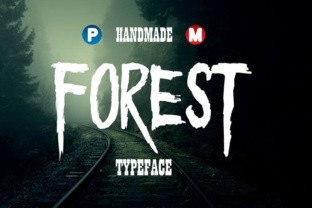
Forest Font: Urban Edge for Headlines and Posters
When you’re designing for impact—whether it’s a poster for a music festival, packaging for a streetwear brand, or a headline that needs to stop a scrolling finger—font choice makes or breaks the message. The right typeface doesn’t just carry words; it sets a mood, anchors an identity, and communicates before a single letter is read. That’s where Forest steps in. This isn’t another generic sans serif. It’s a display font built with an unmistakable urban feel—industrial, bold, and unapologetically confident.
If you’ve been searching for a typeface that balances raw energy with professional polish, Forest deserves a close look. Let’s break down what makes it tick, where it works best, and how you can put it to use in your next project.
What Makes Forest Unique?
Forest draws from the visual language of city streets—graffiti, signage, warehouse lettering, and modern architecture. But it’s not merely decorative; it’s designed with function in mind. The characters are bold and slightly condensed, with tight spacing and sharp angles that command attention without sacrificing readability.
- Strong geometric structure – Each letterform feels intentional and grounded, with uniform stroke widths and clean terminals.
- High x-height – This makes the font legible even at smaller sizes, which is rare for display fonts with this much attitude.
- Multiple weights or stylistic alternates – Depending on the version you work with, Forest may offer options like inline, outline, or stencil variants. These give you flexibility to shift from gritty to refined without changing families.
- Urban character – The overall aesthetic leans into what many call “industrial modern.” Think exposed brick, steel beams, subway maps, and concert posters.
These characteristics mean Forest isn’t a wallflower. It’s built to lead, not follow. That’s both a strength and a constraint—you want to use it where it can do its job without competing for attention.
Where Forest Shines: Practical Applications
Forest was made for headlines, big statements, and bold branding. But “bold” doesn’t mean one-dimensional. Here are the environments where this font consistently delivers.
Posters and Event Graphics
Whether it’s a concert, art opening, or film screening, Forest gives posters immediate visual weight. Pair it with a high-contrast background—black on white, or white on dark concrete textures—and the text jumps off the page. For event names and dates, the condensed letterforms let you stack lines tightly without feeling cramped. This is especially useful when poster real estate is limited or you want a dense, layered look.
Packaging
Streetwear, limited-edition sneakers, craft beer, or specialty coffee—any product that wants to signal authenticity and edge can benefit from Forest. On packaging, the font works best for product names and taglines. Because it’s a display face, avoid using it for ingredient lists or fine print. Instead, let it own the front label while a simpler sans serif handles the back.
Advertising and Headlines
Digital and print ads rely on a split-second capture. Forest’s strong verticality and even stroke width create high contrast against both photographic backgrounds and solid color fields. In banner ads, social media visuals, or magazine spreads, the font pulls the viewer’s eye directly to the promise: the sale, the new drop, the slogan. Keep the text short—one to three words maximum—and let the letters do the heavy lifting.
Branding and Signage
For businesses that want an urban identity—gyms, barbershops, tattoo studios, skate shops, creative agencies—Forest can form the backbone of a logo wordmark. Its consistent geometry makes it easy to incorporate into badges, storefronts, and even environmental graphics. If you’re designing a sign, test it at the distance people will see it. Forest holds up well because the counters (the open spaces inside letters) are generous for its style.
Using Forest in Digital and Print
One of the first questions designers ask about any display font is: “Will it work on screen?” Forest does, but with some practical notes. On digital, keep sizes above 24px for body copy (though it’s rarely used for body text). For headlines on websites, 48px and larger is where the urban character becomes most pronounced without losing readability.
In print, Forest pairs naturally with heavy stock and matte finishes. The font’s sharp edges and solid weight come across well in letterpress or foil stamping. If you’re working with a small print run, consider using the boldest weight for the main element and a lighter variant for secondary headlines. The contrast within the same family reduces the need for multiple typefaces.
One thing to watch for: small caps or all-caps settings. Forest is designed predominantly for uppercase usage. If you need lowercase, test the spacing carefully—some display fonts tighten too much in lowercase and lose legibility. Forest’s uppercase-heavy DNA means you can set entire titles in caps without it feeling shouty if the context calls for authority.
Tips for Choosing and Using Forest
Forest isn’t a font for every job. That’s a good thing. Here’s how to decide if it’s right for your project—and how to use it well once you’ve chosen it.
- Match the tone. Forest carries an urban, gritty vibe. It works best for brands and messages that are direct, confident, and maybe a little rebellious. If your brand is soft, traditional, or feminine-leaning, this font will clash. Save it for when you want something with a harder edge.
- Mind the spacing. Because Forest is condensed, pair it with generous letter spacing (tracking) for readability, especially in print. Too tight, and letters blend; too loose, and you lose the compact urban feel. Adjust tracking up by 10–20 units for headlines.
- Pair with neutrality. Forest works well with simple, clean fonts for body copy. Sans serifs like Helvetica, Inter, or system fonts keep the hierarchy clear. Avoid pairing it with other display fonts—you’ll get visual chaos.
- Test at full scale. Always mock up a poster or logo at the intended size. A font that looks balanced on screen at 72px may feel thin or heavy when printed two feet wide. Print a test sheet or use a zoom tool to simulate the real dimensions.
- Inspect the license. Some font families have restrictions on embedding, commercial use, or number of users. If you’re using Forest for a client’s branding, ensure you have the correct license. This is standard practice but often overlooked.
Real-World Usage Examples
Imagine a limited-edition coffee brand launching a blend called “Rise & Grind.” The label uses Forest in black on a kraft paper bag, with a bold “RISE” in caps and a smaller “& Grind” in a lighter weight underneath. The urban aesthetic tells you this isn’t your standard grocery-store roast—it’s something with a Brooklyn warehouse attitude.
Or a music track poster for a local indie band. The band name is set in Forest, outlined version, with a solid weight for the venue. The condensed shape allows the name to fill the top third of the poster, and the outline treatment lets the background texture show through. At a glance, you know the genre and the mood without reading a single word.
On the branding side, a men’s grooming studio uses Forest for its logo lockup. The word “BLADE” sits above “Barbers” in a simpler sans serif. The font’s straight lines and even curves echo the precision of a barber’s tool. That kind of subtle connection between type and industry is where Forest adds real value beyond decoration.
Practical Considerations Before You Commit
Every font has trade-offs, and Forest is no exception. Its boldness can be a liability in layouts that need subtlety. If you’re designing a multi-page document, a website with long paragraphs, or anything where the text needs to be secondary to imagery, Forest is the wrong tool. Stick to it for hero moments only.
Also, check how the font renders in lowercase if you plan to use mixed case. Some versions of Forest have lowercase glyphs that feel noticeably lighter than the uppercase. If that imbalance bothers you, consider using small caps or sticking to uppercase-only design patterns.
Finally, consider your audience. Urban doesn’t mean inaccessible—many consumers appreciate the aesthetic when it’s applied thoughtfully. But if your target demographic skews toward a more polished, corporate look, Forest may come across as too raw. Know your brand’s voice and the context in which the font will appear.
Forest is a tool, not a magic wand. When used with intention, it elevates projects that need an injection of street-level character. Let it claim the spotlight on your next headline, poster, or packaging concept, and watch how quickly the urban feel connects with the people you’re trying to reach.