Elpida Thin: A Delicate Outline Font for Modern Decorative Design
In an era where visual communication defines first impressions, the choice of typography has never been more critical. Among the fonts that have quietly gained traction among designers, marketers, and content creators is Elpida Thin. This stunning outline font, built on the premise that less is indeed more, brings a refined, airy quality to display work. Its thin, delicate strokes and open letterforms make it an ideal candidate for projects that demand elegance without visual clutter. But what exactly makes Elpida Thin relevant today, and how can professionals and hobbyists alike harness its potential?
The Rise of Minimalist Typography in a Crowded Visual Landscape
Over the past decade, design trends have shifted decisively toward minimalism. As screens multiply and attention spans shorten, audiences gravitate toward clean, uncluttered visuals. Bold, heavy fonts still have their place, but a growing number of creators are seeking alternatives that whisper rather than shout. Elpida Thin fits perfectly into this paradigm. Its outline structure—where each character is defined by a fine line rather than a solid fill—creates a sense of transparency and lightness that heavier fonts cannot replicate.
Current user expectations lean heavily toward authenticity and sophistication. People are increasingly drawn to designs that feel intentional, understated, and premium. Elpida Thin answers that call. It does not demand attention; it earns it. Whether used in branding, editorial layouts, or digital content, this font conveys a quiet confidence that resonates with audiences looking for something above the generic.
Why Outline Fonts Are Gaining Traction
Outline fonts, once considered niche, have entered the mainstream as part of a broader open-form aesthetic. They work especially well in contexts where layering, transparency, or negative space are key design elements. Elpida Thin builds on this trend with a precision that feels both contemporary and timeless. Its thin lines allow background colors, textures, and images to peek through, making it a powerful tool for creating depth without complexity.
For creators and business owners, this means a single font can do double duty: it can act as a focal point in a headline or serve as a subtle embellishment in a logo or watermark. The versatility is built into the design itself.
How Elpida Thin Fits Into Modern Workflows and Creative Practices
The tools and platforms that designers and marketers use daily have evolved to support more expressive typography. From Canva and Adobe Creative Suite to web-based editors and social media schedulers, the ability to import and customize fonts like Elpida Thin has become straightforward. This accessibility lowers the barrier for entrepreneurs and bloggers who may not have formal design training but still want their materials to look polished.
Consider a freelance brand consultant developing a mood board for a luxury skincare client. A heavy sans-serif might feel too aggressive, while a script font could come across as overly ornate. Elpida Thin, with its fine outlines, offers a middle ground that feels both modern and delicate. It communicates purity, lightness, and attention to detail—qualities that align perfectly with premium beauty and wellness brands.
For educators and course creators, using Elpida Thin in presentation slides or handout headers can elevate the visual tone without distracting from the content. The key is to use it sparingly and intentionally, letting its delicacy enhance rather than overwhelm.
Practical Applications Across Different Fields
The range of projects where Elpida Thin excels is broad, but a few stand out as particularly well-suited:
- Branding and Logo Design: Outline fonts work exceptionally well for logos that need to remain legible at small sizes while retaining a distinctive character. Elpida Thin is especially effective for brands built around ideas of freshness, clarity, or elegance.
- Wedding and Event Stationery: Invitations, save-the-dates, and programs benefit from the font’s delicate presence. It pairs beautifully with floral motifs and soft color palettes.
- Social Media Graphics: In a crowded feed, a thin outline font stands out precisely because it doesn’t blend in. Use it for quotes, announcements, or layered text over photos.
- Packaging and Labels: For small-batch products, especially in food, beauty, or wellness, Elpida Thin conveys craftsmanship and care.
- Web and App UI: While not suited for body text, it can be used effectively for hero section headers, badges, or decorative elements that benefit from a light touch.
Why People Are Paying More Attention to Typography Today
Typography has always mattered, but several converging factors have pushed it into the spotlight. The first is the sheer volume of content produced daily. With millions of posts, ads, and websites vying for attention, visual differentiation has become a survival skill. Fonts like Elpida Thin give creators a way to stand out without resorting to gimmicks.
Second, the rise of remote work and digital entrepreneurship has placed more emphasis on self-presentation. A freelancer’s portfolio, a coach’s landing page, or a small business’s Instagram feed now serve as primary storefronts. Typography decisions that once seemed minor now carry significant weight in shaping perception.
Finally, there is a growing appreciation for craftsmanship in design. Audiences are more visually literate than ever. They notice when a font feels generic or poorly chosen. Using a distinctive, well-crafted typeface like Elpida Thin signals that the creator values quality and thoughtfulness. It builds trust.
The Role of Delicacy in an Age of Visual Noise
One might assume that thin, delicate fonts would struggle to compete in a loud digital environment. But the opposite is often true. In a landscape saturated with bold colors, heavy weights, and aggressive calls to action, something light and refined can cut through by offering visual rest. Elpida Thin doesn’t fight for attention; it invites it. This makes it particularly effective in spaces where audiences are already engaged, such as editorial features, lookbooks, or premium product pages.
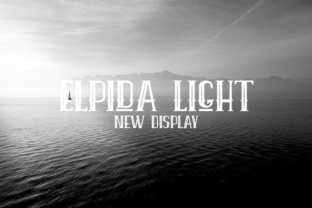
The font’s outline structure also allows for creative layering. For example, a designer can place Elpida Thin text over a blurred image or a gradient background, and the letters will read clearly while maintaining a sense of openness. This play between foreground and background is difficult to achieve with solid fonts and gives projects a polished, editorial feel.
Practical Recommendations for Using Elpida Thin
Working with a delicate outline font requires some consideration. Here are grounded, actionable tips for getting the best results:
- Pair it with a solid weight font. Use Elpida Thin for headlines or decorative accents, and complement it with a clean sans-serif or serif for body text. This creates contrast and improves readability.
- Watch your background. Because the font is thin and outlined, busy or low-contrast backgrounds can cause letters to disappear. Stick to solid, light, or muted backgrounds for maximum legibility.
- Use it at larger sizes. Elpida Thin shines when it has room to breathe. At small sizes or low resolutions, the fine lines may lose definition. Reserve it for display purposes where scale works in its favor.
- Consider color and texture. The outline nature of the font invites experimentation. Try using it in a color that contrasts with the background, or add a subtle drop shadow to increase depth without losing the delicate feel.
- Don’t overuse it. Like any distinctive tool, Elpida Thin works best when applied selectively. A single headline, logo, or accent element can carry the weight; using it everywhere can dilute the effect.
Examples in Practice
Imagine an independent ceramicist launching a new collection. The branding needs to reflect the handmade, organic quality of the work while still appearing professional. Using Elpida Thin in the logo, paired with a warm, neutral color palette and a simple serif for product descriptions, creates a cohesive look that feels both artisanal and contemporary. The font’s delicacy mirrors the thin rims of the ceramics and the careful glazing techniques involved.
Or consider a wellness coach redesigning their website. The homepage hero section uses a full-bleed nature photograph with Elpida Thin superimposed in a soft sage green for the tagline. The contrast between the detailed image and the airy text creates a serene, inviting entry point. Visitors immediately understand the tone: calm, thoughtful, and holistic.
In both cases, the font isn’t just decoration. It actively contributes to the message.
Looking Forward: The Place of Thin Outline Fonts in Evolving Design Culture
Typography trends will continue to cycle, but the principles that make Elpida Thin effective are unlikely to fade. As digital environments become more personalized and immersive, the demand for fonts that offer nuance and personality will only grow. Outline fonts, once relegated to novelty status, have proven their staying power by adapting to modern needs: versatility, readability at scale, and emotional resonance.
For entrepreneurs, bloggers, and creators who are building their visual identity, investing time in understanding tools like Elpida Thin is not about following a trend but about expanding one’s vocabulary. The more options a creator has, the more precisely they can communicate their vision.
Whether you are designing a wedding invitation, a brand mark, a presentation, or a social media campaign, Elpida Thin offers a distinctive voice that is both elegant and functional. Its delicate lines carry weight in the right hands. And in a world where so much design shouts, a font that whispers can make all the difference.